





What's Happening?
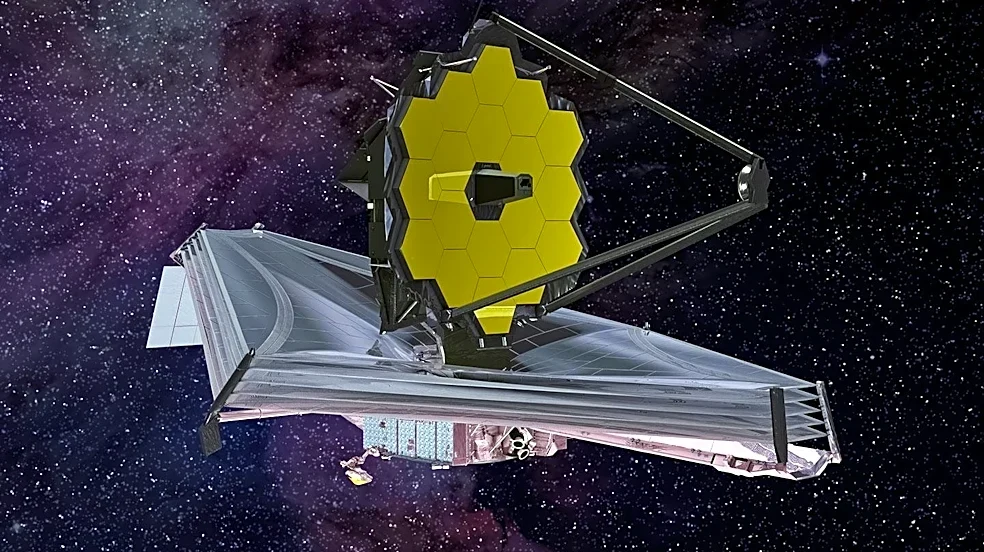
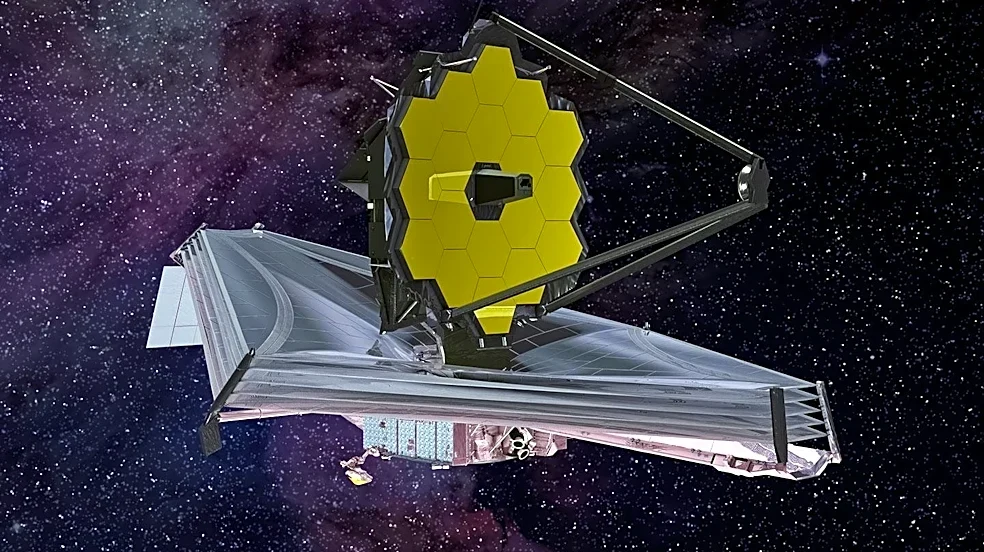
The James Webb Space Telescope (JWST) has provided unprecedented observations of WISE 0855, the coldest known brown dwarf, revealing complex weather patterns. For 11 hours on December 2, 2023, Webb recorded spectra of the object, allowing astronomers
to differentiate between cloud formations, temperature shifts, and atmospheric chemistry. The findings indicate two distinct types of weather occurring at different atmospheric depths. High in the atmosphere, water clouds were observed to thicken and thin, while deeper down, gases originating from the brown dwarf's hot interior showed rhythmic changes. This marks the first time scientists have confirmed the dynamic nature of water clouds on a celestial body outside our solar system. Brittany Miles, an astronomer at the University of Arizona’s Steward Observatory, led the 27-member research team that published these findings in The Astrophysical Journal. Previous observations by the Spitzer Space Telescope in 2015 had detected brightness variations but could not pinpoint their cause.
Why It's Important?
This discovery is significant because it advances our understanding of atmospheric dynamics on substellar objects, bridging the gap between planets and stars. Brown dwarfs, which are too massive to be planets but too small to ignite as stars, exhibit planet-like weather phenomena. The ability of JWST to distinguish between various atmospheric components—clouds, temperature, and chemistry—provides a more detailed picture of these distant worlds. This research helps refine atmospheric models for brown dwarfs and, by extension, for giant exoplanets, which share similar physical and chemical processes. Understanding these fundamental physics and chemistry principles can be applied across a spectrum of celestial bodies, from gas giants in our solar system like Jupiter to exoplanets orbiting other stars. The study highlights the power of advanced telescopic capabilities in unraveling the complexities of extraterrestrial atmospheres.
What's Next?
Future observations with the James Webb Space Telescope are planned to further investigate the atmospheric dynamics of WISE 0855. Researchers aim to conduct observations longer than 20 hours to precisely determine the brown dwarf's rotation period, which remains uncertain. Such extended viewing periods could also help ascertain whether the observed deep atmospheric gas changes are due to persistent bands of wind, similar to Jupiter's stripes, or localized, stationary storms. Continued monitoring will provide more data to refine existing atmospheric models and potentially uncover additional weather phenomena. The insights gained from WISE 0855 are expected to inform studies of giant planets around other stars, as the underlying physical and chemical principles are believed to be broadly applicable across these diverse celestial objects.
Beyond the Headlines
The detailed observation of weather on WISE 0855 underscores the evolving definition and understanding of 'weather' beyond Earth. It highlights that complex atmospheric processes, including cloud formation and gas circulation, are not unique to planets but are fundamental aspects of many celestial bodies. This research also emphasizes the interconnectedness of astrophysical phenomena, suggesting that the same basic physics and chemistry govern atmospheric behavior across a wide range of masses and temperatures. The ability to observe these real-time changes on a distant object like WISE 0855 pushes the boundaries of astronomical observation, offering a glimpse into the dynamic nature of the universe and challenging previous assumptions about the static nature of such cold, dim objects. It opens new avenues for comparative planetology, extending our understanding of atmospheric science to environments vastly different from our own.