







What's Happening?
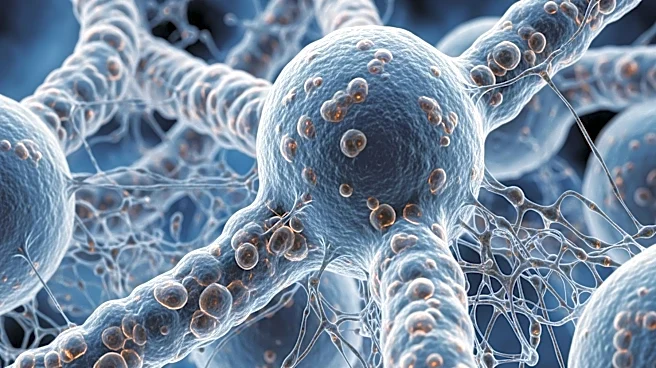
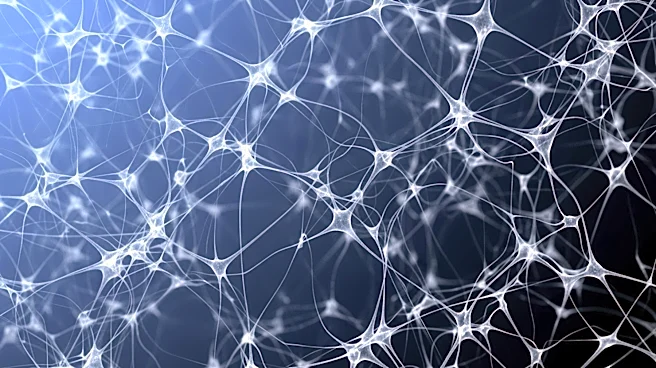
A recent study conducted by researchers at NYU Langone Health has uncovered that astrocytes, a type of brain cell traditionally seen as supportive, form complex networks across the mouse brain. These networks connect distant brain regions in ways previously
unmapped. The study, led by Dr. Melissa Cooper, utilized a custom-built tracing tool to map these astrocyte networks, revealing that they communicate with specific astrocytes across the brain, rather than just sending local signals. This discovery challenges the long-held belief that neurons are the primary communicators in the brain. The research, published in the journal Nature, suggests that astrocytes play a significant role in brain communication, potentially impacting our understanding of brain development, aging, and diseases such as Alzheimer's and Parkinson's.
Why It's Important?
The findings from this study could have significant implications for neuroscience and the treatment of neurological diseases. By demonstrating that astrocytes form their own communication networks, the research suggests a more complex understanding of brain function, which could lead to new approaches in treating neurodegenerative diseases. The ability of astrocytes to redistribute resources and form dynamic networks indicates that they may play a crucial role in brain plasticity and recovery from injury. This could pave the way for novel therapeutic strategies targeting astrocyte networks to enhance brain repair and function in conditions like Alzheimer's and Parkinson's disease.
What's Next?
The research team plans to further investigate the molecules that move through these astrocyte networks and apply their tracing tool to models of brain disorders. They aim to explore how these networks change during development and aging, which could provide deeper insights into the progression of neurological diseases. Additionally, the study's methods, designed to be low-cost and reproducible, may encourage other labs to explore astrocyte networks in various brain diseases, potentially leading to breakthroughs in understanding and treating these conditions.