
What's Happening?
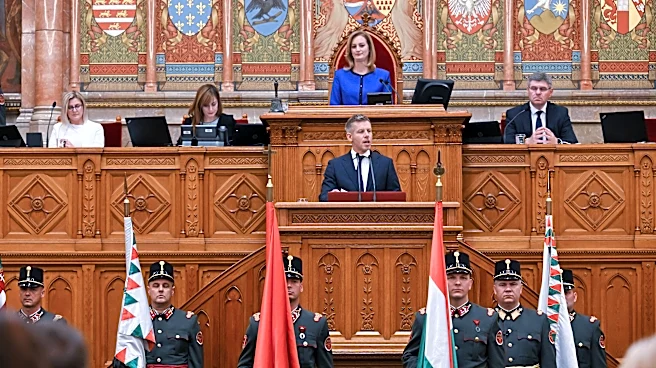
Péter Magyar, recently elected as Hungary's new prime minister, has initiated significant policy changes, reversing many of the actions taken by his predecessor, Viktor Orbán. Magyar's administration has lifted
vetoes that had previously blocked EU sanctions on Israeli settlers and a substantial loan to Ukraine. These moves are part of a broader effort to align Hungary more closely with EU values and interests. Magyar's government is also focusing on anti-corruption measures and judicial reforms, aiming to restore democratic norms in Hungary. The new administration has already begun investigations into alleged corruption and is distancing itself from previous close ties with Russia.
Why It's Important?
The changes introduced by Péter Magyar's government are significant for both Hungary and the European Union. By lifting vetoes and supporting EU initiatives, Hungary is moving towards a more cooperative stance with the EU, potentially unlocking billions in development funds that were previously withheld due to non-compliance with EU laws. This shift could strengthen the EU's geopolitical position and enhance its ability to act in defense of its interests. For Hungary, these reforms could lead to economic benefits and a restoration of democratic practices, which may improve its international standing and domestic governance.
What's Next?
As Hungary continues to implement these reforms, the EU will likely monitor the country's progress closely, particularly in areas like judicial reform and anti-corruption efforts. The success of these initiatives could lead to the release of significant EU funds, further integrating Hungary into the European framework. Domestically, Magyar's government will need to maintain momentum and address the demands of progressive voters, including issues related to LGBTQ+ rights and other liberal causes. The administration's ability to navigate these challenges will be crucial in maintaining public support and achieving its reform goals.