






What's Happening?
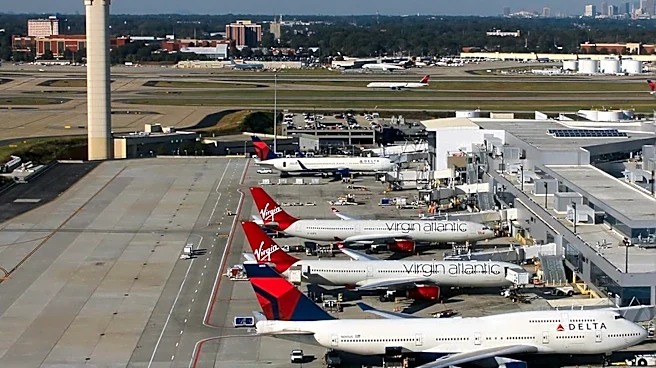
A Delta Airlines flight, DL251, traveling from Barcelona, Spain, to Boston, Massachusetts, was forced to make an emergency landing in Porto, Portugal, on Sunday. The diversion occurred approximately two and a half hours into the eight-and-a-half-hour
flight after smoke filled the aircraft's cabin. The Airbus A330, carrying 296 passengers, landed safely at Porto's Francisco Sá Carneiro Airport. Following the emergency landing, four individuals—three passengers and one crew member—were transported to a local hospital. Two male passengers were admitted to the emergency department due to mild respiratory symptoms from smoke inhalation and are reported to be in stable condition. In total, 12 people required oxygen during the flight, and eight received treatment on the tarmac. The incident was attributed to a mechanical issue on the aircraft, according to Portuguese officials and Delta Airlines.
Why It's Important?
This incident highlights the critical importance of airline safety protocols and emergency response systems in international air travel. For U.S. travelers, particularly those flying Delta Airlines, it underscores the potential for unexpected disruptions and the need for robust contingency plans by carriers. The hospitalization of passengers due to smoke inhalation, even if mild, raises concerns about air quality and mechanical integrity on commercial flights. Such events can impact passenger confidence in air travel and may lead to increased scrutiny from regulatory bodies like the Federal Aviation Administration (FAA) regarding aircraft maintenance and safety standards. Airlines face potential financial implications from flight cancellations, rebooking passengers, and investigations into mechanical failures, which can affect their operational efficiency and public image.
What's Next?
Delta Airlines is working to accommodate the affected passengers on alternative flights to their final destinations in Boston. A Boston-bound flight scheduled to depart from Porto on Monday was canceled, with Delta planning to operate a new flight from Barcelona on Monday afternoon. The cause of the smoke in the cabin has not yet been determined, and investigations into the mechanical issue are expected to follow. This will likely involve Delta Airlines' internal safety teams and potentially aviation authorities in both Portugal and the United States. The airline will need to address the root cause of the mechanical failure to prevent similar incidents and ensure passenger safety on future flights. Passengers may also seek compensation or further information regarding the incident and their travel disruptions.
Beyond the Headlines
The emergency landing of Delta Flight DL251 due to smoke in the cabin touches upon broader implications for aviation safety and passenger experience. Beyond the immediate mechanical failure, such incidents can trigger psychological impacts on travelers, potentially increasing anxiety about air travel. The rapid response of the crew and the safe landing in Porto underscore the rigorous training and emergency procedures in place within the aviation industry. However, the occurrence of smoke in the cabin, regardless of its source, points to the continuous challenge of maintaining complex aircraft systems and the need for advanced detection and suppression technologies. This event could prompt further discussions within the industry about preventative maintenance, cabin air quality monitoring, and emergency communication protocols to enhance passenger safety and comfort.