




What's Happening?
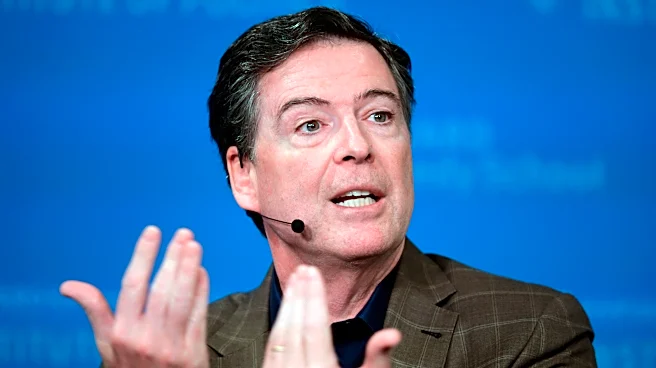
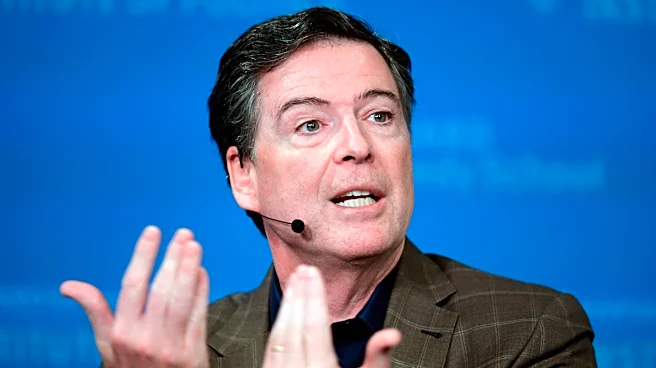
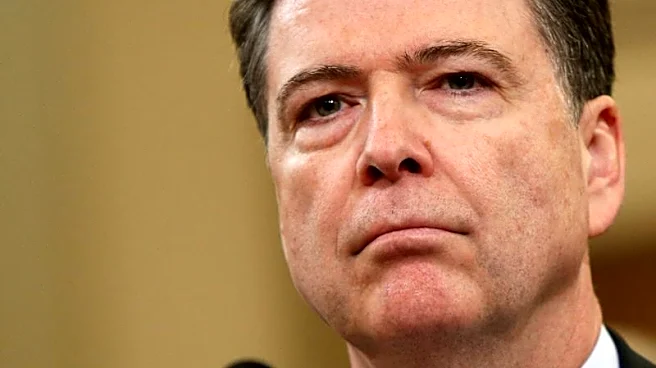
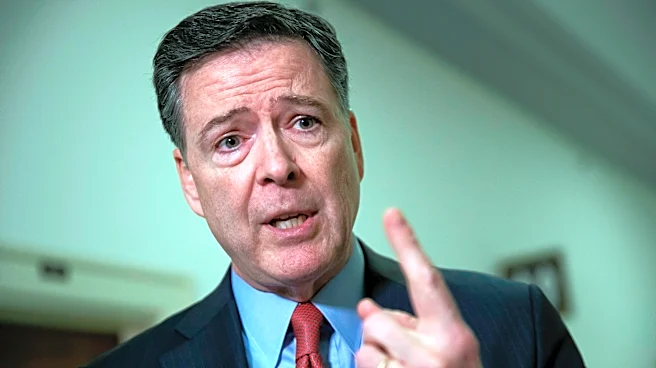
Former FBI Director James Comey has been indicted by a federal grand jury in North Carolina on charges of making threats against President Donald Trump. The indictment stems from an Instagram post made by Comey nearly a year ago, which featured the numbers
'86 47' written in seashells. The post was interpreted by some as a veiled threat against Trump, who is the 47th president. Comey faces charges of threats against the president and transmitting a threat in interstate commerce. This marks the second time Comey has been indicted by the Department of Justice under Trump's administration. Comey is expected to self-surrender to authorities in the Eastern District of Virginia.
Why It's Important?
The indictment of James Comey is significant as it highlights ongoing tensions between the former FBI director and President Trump. The case underscores the broader political climate where actions and statements by public figures are heavily scrutinized and can lead to legal consequences. The charges against Comey could have implications for the interpretation of free speech and the limits of political expression, particularly in the context of social media. The case also reflects the Justice Department's continued focus on individuals perceived as political adversaries of the Trump administration.
What's Next?
Comey is expected to appear in court, where his legal team plans to challenge the indictment on grounds of selective and vindictive prosecution. The case may also involve arguments related to the First Amendment, as the defense could argue that the Instagram post does not constitute a 'true threat.' The outcome of this case could set a precedent for how similar cases are handled in the future, particularly regarding the interpretation of threats made on social media.
Beyond the Headlines
The case against Comey could have broader implications for the legal standards applied to social media posts and the interpretation of threats. It raises questions about the balance between national security concerns and the protection of free speech. Additionally, the case may influence public perception of the Justice Department's impartiality and its role in political matters.