




What's Happening?
U.S. Representative Thomas Massie, R-Crescent Springs, has introduced a bipartisan bill, the Red Meat Inspection Exemption Act, aimed at allowing small farmers to slaughter and process their own livestock for direct sale to consumers. This legislative
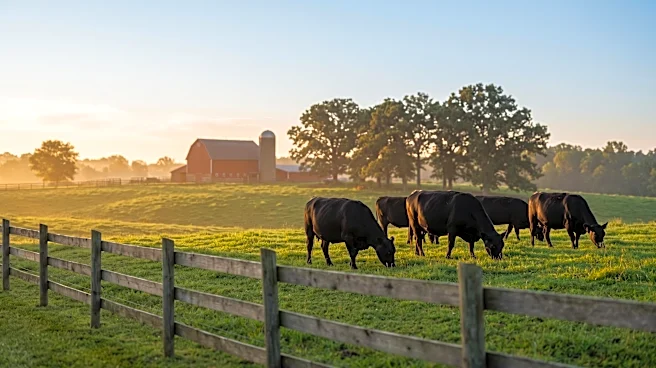
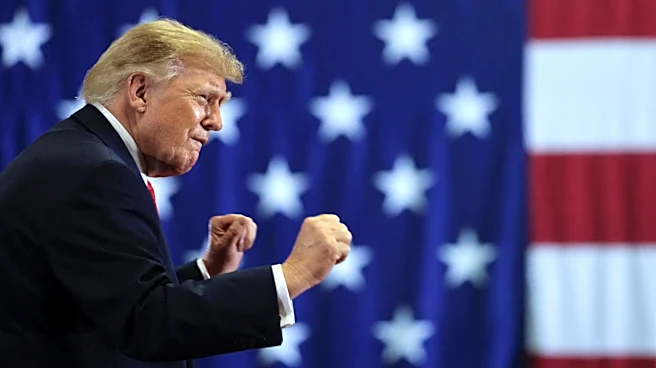
effort follows a promise made by President Trump in August to authorize legal documents enabling farmers and ranchers to process their own food. Currently, farmers like Brian Furnish of Harrison County, who raises cattle, must use USDA-certified facilities to sell individual cuts directly to consumers, incurring additional costs and facing difficulties in securing access to these facilities. Under the proposed bill, farmers would be limited to processing 25 cattle, 60 swine, 250 sheep, or 250 goats annually, while still adhering to food-safety requirements set by the U.S. Department of Agriculture. Furnish supports the measure, emphasizing the importance of healthy products for consumers and reducing federal regulatory burdens.
Why It's Important?
This bill is significant for the U.S. agricultural sector, particularly for small and regional beef processors and farmers. It seeks to reduce the regulatory burden and costs associated with federal inspections, potentially increasing the profitability and market access for small-scale livestock producers. By allowing direct sales, it could foster more localized food systems and provide consumers with more direct access to locally sourced meat. However, the National Cattlemen’s Beef Association (NCBA) has expressed concerns, stating that while they support increasing competition and opportunities for small processors, weakening federal meat inspection and food safety standards is not the answer. This highlights a tension between supporting small farmers and maintaining robust food safety oversight. The legislation could empower small farmers by giving them greater control over their supply chain, but it also raises questions about consumer protection and the potential for varied safety standards across different processing operations.
What's Next?
The Red Meat Inspection Exemption Act will proceed through the legislative process in Congress. Its passage would depend on gaining sufficient bipartisan support and addressing concerns raised by organizations like the NCBA regarding food safety standards. Concurrently, Rep. Massie has also filed the PRIME Act, which would permit farmers to sell cuts of beef inspected by local authorities rather than federally inspected facilities. A pilot program for the PRIME Act is already included in a version of the Farm Bill passed by the House. The future of these bills will likely involve continued debate on the balance between deregulation for small farmers and maintaining federal food safety standards. Stakeholders, including farmer associations, consumer advocacy groups, and industry bodies, will likely continue to voice their perspectives as the legislation progresses.
Beyond the Headlines
Beyond the immediate economic implications for farmers, this legislative push touches on broader themes of federal versus local control, consumer choice, and the evolving landscape of food production and distribution in the U.S. The debate over federal inspection standards versus local oversight reflects a long-standing tension in agricultural policy. If enacted, such legislation could lead to a more decentralized meat processing industry, potentially increasing resilience in local food systems but also requiring robust local inspection frameworks to ensure public health. It could also set a precedent for other agricultural sectors seeking exemptions from federal regulations, prompting a reevaluation of the role of federal agencies in overseeing food production. The ethical dimension of consumer safety, particularly with less stringent federal oversight, will remain a critical point of discussion, shaping public trust in locally processed meats.