








What's Happening?
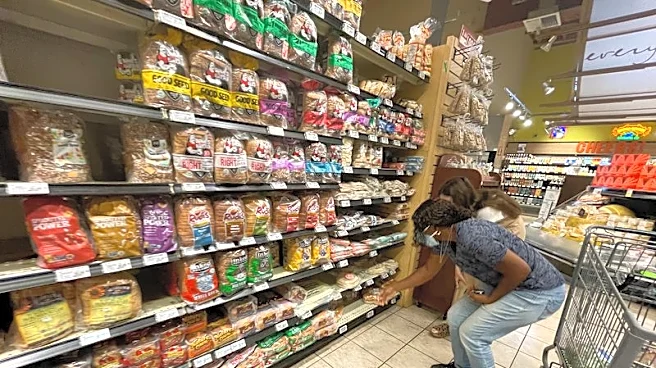
Americans are facing the largest increase in grocery prices in 50 years, prompting many to change their shopping habits. Since 2019, the cost of buying food for home consumption has risen by 33% in U.S. cities. This surge is attributed to various factors,
including supply chain disruptions from the pandemic, natural disasters, and geopolitical tensions affecting oil and fertilizer supplies. As a result, consumers are increasingly turning to couponing, comparison shopping, and cutting back on non-essential items. The economic strain is particularly felt by lower-income households, who spend a larger portion of their income on food.
Why It's Important?
The significant rise in grocery prices is reshaping consumer behavior and impacting household budgets across the United States. This trend highlights the broader economic challenges facing the country, including inflation and wage stagnation. For many families, the increased cost of living is leading to difficult choices about food consumption and financial priorities. The situation underscores the need for policy interventions to address food affordability and support vulnerable populations. Additionally, the issue is becoming a focal point in political discussions, particularly as it affects voter sentiment ahead of upcoming elections.
What's Next?
As grocery prices continue to rise, consumers are likely to further adapt their shopping strategies, potentially leading to shifts in market demand for certain products. Retailers may respond by offering more promotions and discounts to attract cost-conscious shoppers. Policymakers could face increased pressure to implement measures that address food inflation and support economic stability. The ongoing geopolitical tensions and environmental challenges may also continue to influence food prices, necessitating long-term strategies to ensure food security and affordability.