
What's Happening?
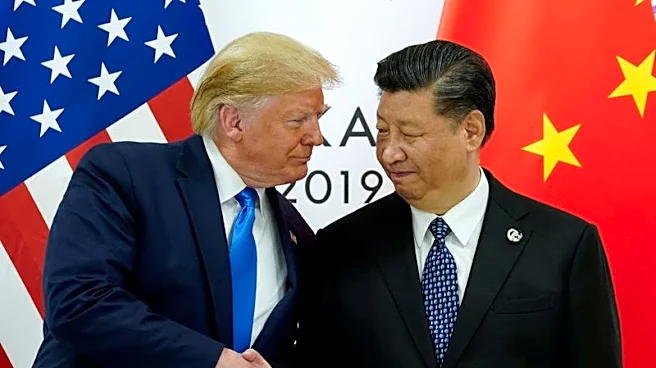
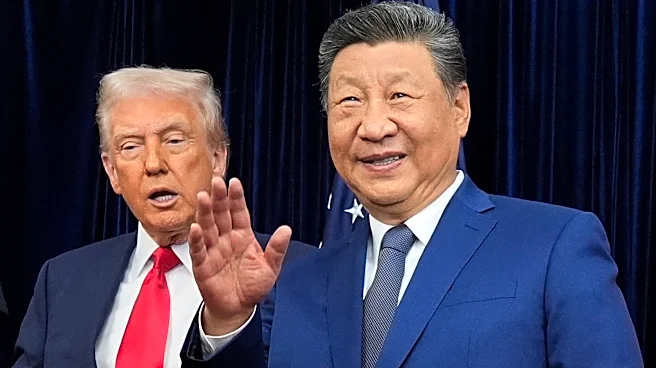
President Donald Trump has invited a group of prominent billionaires to accompany him on a trip to China for a summit with President Xi Jinping. This meeting marks the first summit of Trump's second term
and comes at a time of heightened tensions between the U.S. and China over trade, the conflict in Iran, and the future of artificial intelligence. Among the billionaires expected to join are Tesla's Elon Musk, Apple's Tim Cook, Blackstone's Stephen Schwarzman, and BlackRock's Larry Fink. The summit aims to address these critical issues, with a focus on stabilizing relations and exploring potential cooperation in artificial intelligence. The meeting was initially delayed due to the U.S. conflict with Iran, but both leaders have expressed a desire to strengthen bilateral ties.
Why It's Important?
The summit between President Trump and President Xi Jinping is significant as it addresses several pressing global issues, including trade disputes and technological competition. The presence of high-profile U.S. business leaders underscores the economic stakes involved, as many of these executives have pending deals with China. The outcome of this meeting could influence global markets, particularly in sectors like technology and aviation, where companies like Boeing are negotiating substantial deals. Additionally, the discussions on artificial intelligence could shape future technological collaborations or rivalries between the two superpowers. The summit's success or failure could impact diplomatic relations and economic policies, affecting stakeholders in both countries.
What's Next?
Following the summit, potential outcomes include the resumption of official talks on artificial intelligence and possible agreements on trade and economic cooperation. The involvement of U.S. business leaders suggests that any agreements reached could have immediate implications for corporate strategies and international trade policies. Observers will be watching for any announcements regarding new trade deals or technological partnerships. The meeting's results could also influence future diplomatic engagements between the U.S. and China, setting the tone for how both nations manage their differences and collaborate on global issues.