
What's Happening?
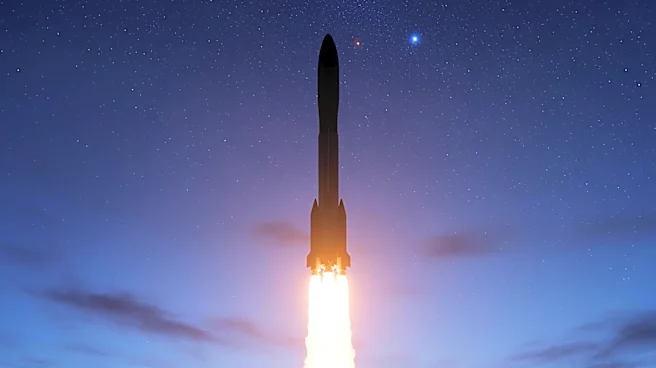
SpaceX's Falcon Heavy rocket has resumed its flight schedule, marking a significant development in the competitive space launch industry. The Falcon Heavy, known for its heavy-lift capabilities, is set
to launch several high-profile missions, including NASA's Nancy Grace Roman Space Telescope and a commercial lunar lander for Astrobotic. Meanwhile, Russia's Soyuz-5 rocket has made its debut, adding to the global competition in space launches. The U.S. Space Force has also announced a list of companies developing Space-Based Interceptors as part of the Golden Dome initiative, aimed at enhancing national defense capabilities against various missile threats.
Why It's Important?
The resumption of Falcon Heavy flights underscores SpaceX's pivotal role in the U.S. space industry, providing critical launch services for both government and commercial clients. This development highlights the increasing competition in the global space launch market, with new entrants like Russia's Soyuz-5 and ongoing projects by companies like Blue Origin. The advancements in space launch capabilities are crucial for national security, scientific research, and commercial ventures. The U.S. Space Force's Golden Dome initiative further emphasizes the strategic importance of space in national defense, with significant investments in developing advanced missile defense systems.
What's Next?
SpaceX plans to continue its series of Falcon Heavy launches, with several missions scheduled over the next few years. The success of these missions will be critical for maintaining the U.S.'s competitive edge in space exploration and defense. The development of Space-Based Interceptors will proceed with prototype testing, leading to full-scale production contracts. The outcomes of these initiatives will influence the future landscape of space exploration and defense, with potential implications for international collaborations and regulatory frameworks.