






What's Happening?
Leonardo DRS has finalized the delivery and training for its INOD Block III thermal weapon sights to the Australian Army. This initiative, part of Australia's Land 159 modernization program, equips Australian snipers and special operations units with
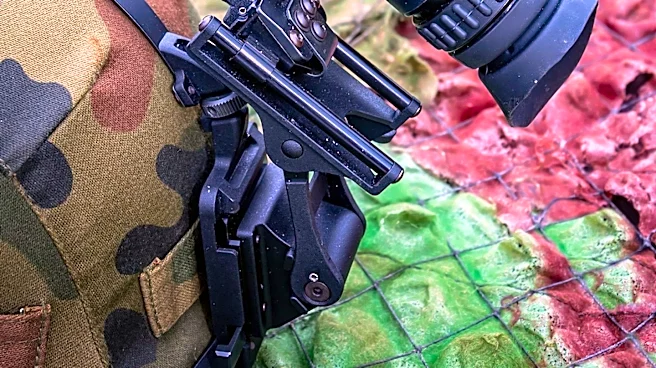
advanced thermal technology designed to improve target detection and engagement in challenging conditions such as low light, smoke, or harsh weather. The INOD Block III is a clip-on attachment that mounts directly in front of standard daylight scopes without affecting pre-set zeroing, offering magnification levels from five to 25 times. It is powered by a micro-cooled 640x480 mid-wave infrared sensor and features hot-swappable lithium batteries, with options for external power for extended surveillance. Queensland-based NIOA served as the primary contractor, managing domestic logistics and program execution. Leonardo DRS highlighted that this technology is also deployed by U.S. Army Special Operations Forces, fostering combat interoperability between the two allied nations.
Why It's Important?
This completion of deliveries and training is significant for U.S. military interoperability and defense industry relations. By providing the Australian Army with the same thermal technology used by U.S. Army Special Operations Forces, the initiative directly enhances the ability of both nations' military personnel to operate together seamlessly in combat scenarios. This shared technology streamlines communication, training protocols, and logistical support, which is crucial for effective joint operations and coalition warfare. For the U.S. defense industry, represented by Leonardo DRS, this contract underscores its role as a key supplier of advanced military technology to allied nations, reinforcing its market position and contributing to its revenue. The successful execution of such contracts can lead to future collaborations and strengthen defense ties, which are vital for maintaining regional stability and addressing shared security challenges. The transfer of advanced capabilities also ensures that allied forces are equipped with cutting-edge tools, potentially reducing the burden on U.S. forces in joint missions.
What's Next?
The successful deployment of the INOD Block III thermal sights is expected to lead to continued enhancements in the Australian Army's sniper capabilities. Future developments may include further integration of advanced U.S. military technologies into Australian defense systems, potentially expanding the scope of interoperability between the two forces. The ongoing Land 159 modernization program in Australia will likely continue to seek out and incorporate state-of-the-art equipment, and Leonardo DRS, having successfully completed this phase, could be a strong contender for future contracts. This could also set a precedent for other allied nations looking to upgrade their military capabilities and improve their interoperability with U.S. forces. The focus will likely shift to evaluating the operational effectiveness of the new equipment in real-world scenarios and identifying any further training or technological needs.
Beyond the Headlines
Beyond the immediate military benefits, this collaboration highlights a broader trend of deepening defense alliances and technological integration among Western nations. The sharing of advanced military technology, particularly in sensitive areas like special operations, reflects a high degree of trust and strategic alignment between the U.S. and Australia. This technological convergence can have long-term implications for defense procurement strategies, potentially leading to more standardized equipment across allied forces. It also underscores the importance of private defense contractors like Leonardo DRS in shaping international security dynamics. The ethical implications of deploying such advanced targeting technology, particularly in terms of precision and minimizing collateral damage, are also a continuous consideration in modern warfare, emphasizing the need for rigorous training and adherence to rules of engagement.