



What's Happening?
In Gaza, thousands of displaced residents are bracing for harsh winter conditions as they await progress in ceasefire talks between Israel and Hamas. Many families, displaced by the ongoing conflict, are living in makeshift tents that offer little protection
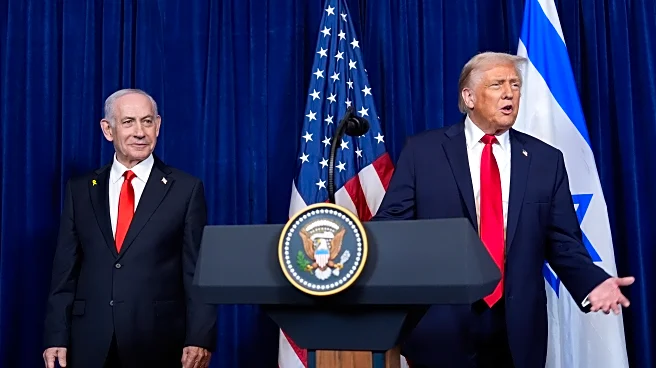
against the cold and rain. The Gaza Health Ministry reports that dozens have died from hypothermia or due to the collapse of war-damaged homes. Aid organizations are calling for increased humanitarian aid to provide adequate shelter. Meanwhile, ceasefire negotiations continue, with Israeli Prime Minister Benjamin Netanyahu expected to visit Washington to discuss the next phase of the ceasefire agreement, which includes the deployment of an international stabilization force and further Israeli troop withdrawals.
Why It's Important?
The situation in Gaza highlights the severe humanitarian crisis faced by its residents, exacerbated by the ongoing conflict and harsh winter conditions. The outcome of the ceasefire talks could significantly impact the region's stability and the well-being of its inhabitants. Successful negotiations may lead to improved living conditions and reduced hostilities, while failure could prolong the suffering of civilians. The international community's response and the provision of humanitarian aid are crucial in addressing the immediate needs of the displaced population.
What's Next?
As ceasefire talks progress, key issues such as the disarmament of Hamas and the establishment of a technocratic governing body for Gaza remain on the table. The international community will be closely monitoring the situation, with potential implications for regional stability and international relations. Humanitarian organizations are likely to continue advocating for increased aid and support for Gaza's residents, while political leaders work towards a sustainable resolution to the conflict.