






What's Happening?
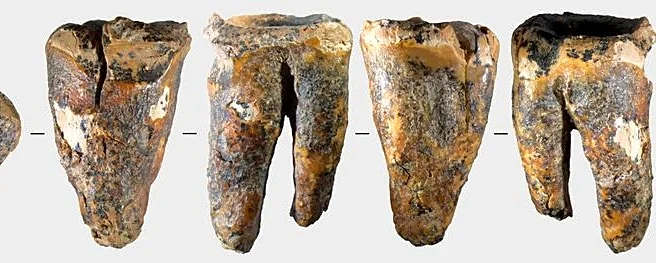
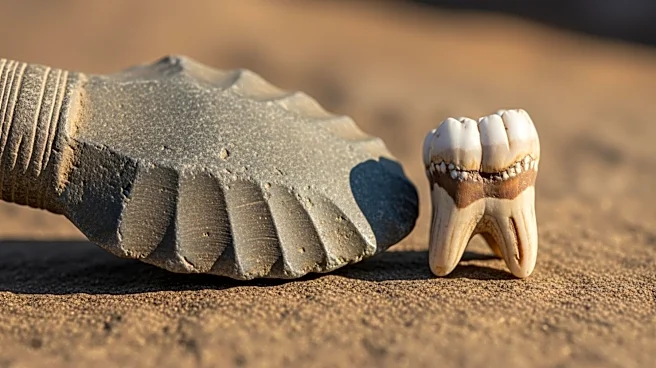
A 59,000-year-old Neanderthal tooth found in southwestern Siberia has revealed evidence of prehistoric dentistry. The tooth, discovered in a cave, features a circular drill hole, indicating an early form of dental intervention. This finding, published
in PLOS One, suggests that Neanderthals had the cognitive abilities to diagnose and treat dental issues, pushing back the history of human dentistry by about 40,000 years. The study highlights the sophistication of Neanderthal culture, challenging the notion of their primitiveness and suggesting they possessed complex cognitive skills necessary for medical procedures.
Why It's Important?
This discovery is significant as it reshapes our understanding of Neanderthal capabilities, highlighting their advanced cognitive and social skills. The ability to perform dental procedures indicates a level of reasoning and planning previously not attributed to Neanderthals. This finding contributes to the growing body of evidence that Neanderthals were not as primitive as once thought, possessing skills and knowledge comparable to early modern humans. It also deepens the mystery of why Neanderthals, despite their capabilities, did not survive as a species.