
What's Happening?
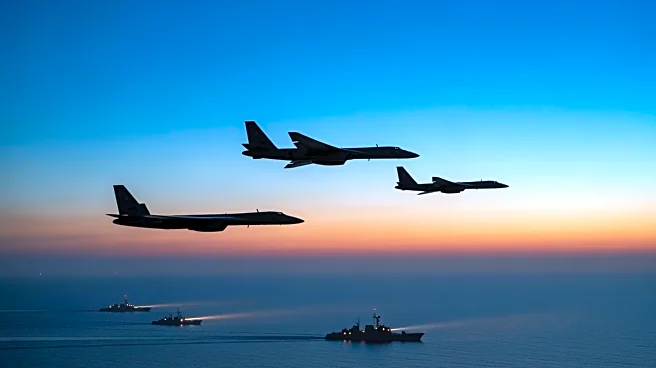
Japan and South Korea scrambled fighter jets in response to a joint Chinese-Russian bomber patrol over international waters near their territories. The patrol, part of an annual exercise, involved Russian Tu-95
bombers and Chinese H-6 bombers, which flew near Okinawa, Japan. The patrol also included Chinese J-16 fighters and Russian Su-30 fighters. This military activity comes amid heightened tensions between China and Japan, particularly over Japan's support for Taiwan. The joint flights have become routine since 2019, often occurring without prior notice, and are seen as a demonstration of military cooperation between China and Russia.
Why It's Important?
The joint military patrols by China and Russia in the region underscore the strategic partnership between the two countries and their willingness to project military power in East Asia. These actions are significant in the context of regional security dynamics, particularly as Japan and South Korea are key U.S. allies. The patrols could exacerbate tensions between China and Japan, especially given Japan's recent military developments and its stance on Taiwan. The situation highlights the complex geopolitical landscape in East Asia, where military posturing and alliances play a critical role in maintaining or disrupting regional stability.
What's Next?
Japan and South Korea are likely to continue monitoring military activities closely and may enhance their defense readiness in response to these joint patrols. Diplomatic efforts may be pursued to address the security concerns raised by these flights. The international community will be observing how these developments affect regional alliances and security policies. The ongoing military cooperation between China and Russia could lead to further joint exercises, potentially influencing the strategic calculations of other countries in the region.