



What's Happening?
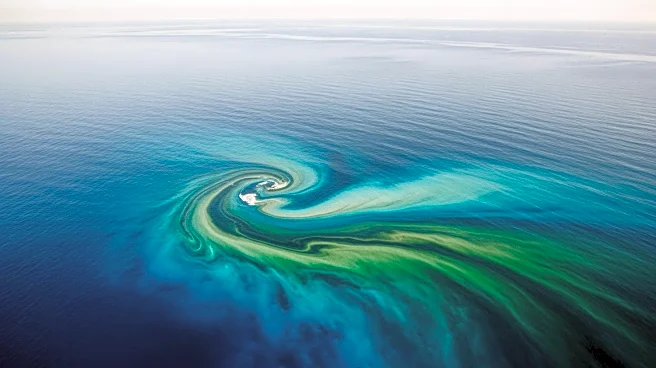
NASA satellites have captured images of the ocean around the Chatham Islands, located east of New Zealand, turning unusual colors. The images, taken on January 10, 2026, show swirls of green and blue, indicating a significant phytoplankton bloom. This
natural phenomenon is driven by the convergence of cold Antarctic currents and warmer subtropical waters, creating ideal conditions for phytoplankton growth. The Chatham Rise, a submarine plateau, enhances nutrient upwelling, supporting this vibrant marine ecosystem.
Why It's Important?
Phytoplankton blooms are crucial for marine ecosystems as they form the base of the oceanic food web, supporting a wide range of marine life, including fish and marine mammals. The blooms also play a role in carbon cycling and can impact local fisheries. However, the region is also known for frequent mass strandings of marine mammals, which researchers are investigating for potential links to oceanographic features.
Beyond the Headlines
The phenomenon highlights the complex interactions within marine ecosystems and the importance of satellite technology in monitoring environmental changes. Understanding these blooms can provide insights into ocean health and inform conservation efforts. The frequent strandings in the area also raise questions about the impact of environmental changes on marine life.