



What's Happening?
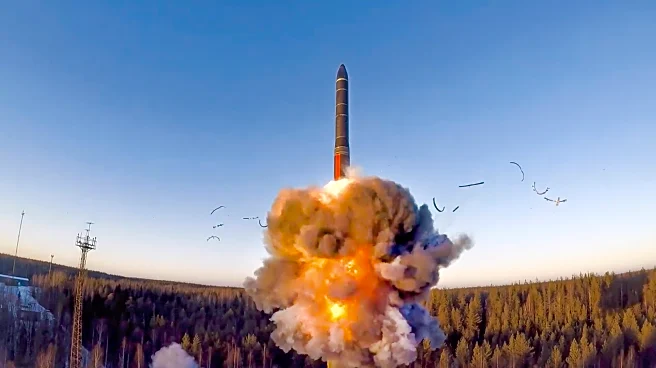
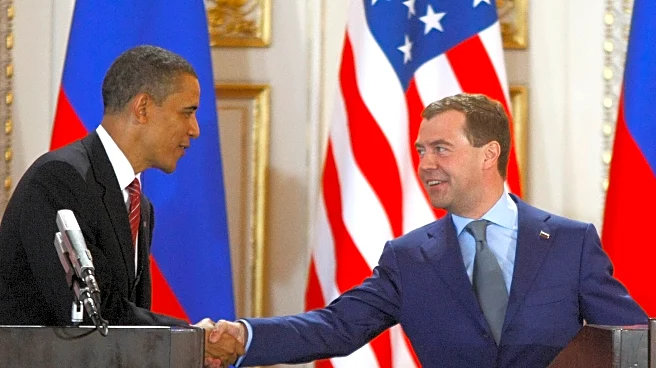
The New START treaty, a pivotal arms control agreement between the United States and Russia, expired on February 5, 2026. This treaty, which had been in place since 2011, limited both nations to 1,550 deployed nuclear warheads and set caps on various
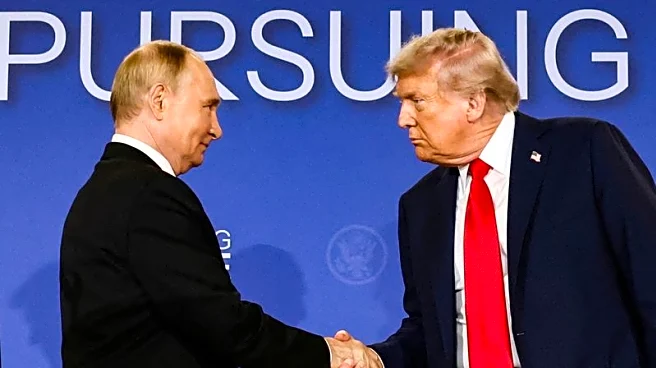
delivery systems. With its expiration, there are no longer any constraints on the nuclear arsenals of the two largest nuclear powers. The treaty's lapse has sparked fears of a potential arms race, particularly as China continues to expand its nuclear capabilities. Critics of the treaty, including President Trump, have pointed out that it did not include China, which is projected to significantly increase its nuclear stockpile by 2035. The absence of a new agreement raises concerns about a three-way arms race among the U.S., Russia, and China.
Why It's Important?
The expiration of the New START treaty marks a significant shift in global nuclear arms control, potentially leading to increased international insecurity. Without the treaty's limitations, the U.S. and Russia could expand their nuclear arsenals, prompting a costly and destabilizing arms race. This development could also influence global power dynamics, as China continues to grow its nuclear capabilities. The lack of a binding agreement may lead to increased tensions and the risk of miscommunication or miscalculation, which could escalate into conflict. The situation underscores the importance of diplomatic efforts to establish new arms control measures that include China, to prevent a dangerous escalation in nuclear armament.
What's Next?
The future of arms control remains uncertain, with potential diplomatic efforts needed to address the growing nuclear capabilities of China. The U.S. may seek to negotiate a new agreement that includes China, but Beijing has so far resisted such talks. The expiration of the treaty could lead to the U.S. and Russia increasing their nuclear arsenals, potentially prompting other nations to consider expanding their own capabilities. The international community may need to explore new frameworks for arms control to prevent a destabilizing arms race and ensure global security.
Beyond the Headlines
The expiration of the New START treaty highlights broader issues in international arms control, including the challenge of integrating emerging nuclear powers like China into existing frameworks. The situation raises ethical and strategic questions about the role of nuclear weapons in national security and the potential consequences of an unchecked arms race. It also underscores the need for innovative diplomatic solutions to address the complexities of modern nuclear deterrence and the importance of maintaining global stability in an increasingly multipolar world.