
What's Happening?
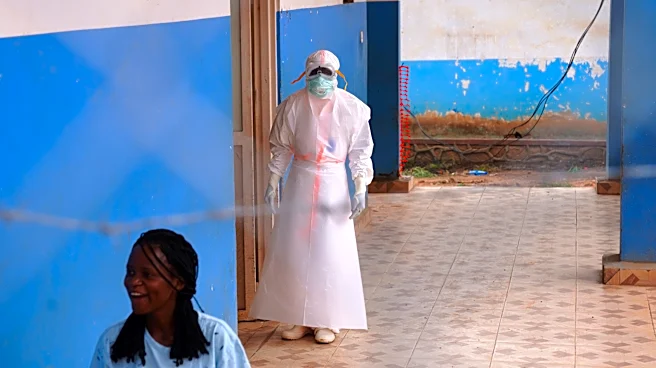
The Democratic Republic of the Congo (DRC) is facing a severe Ebola outbreak exacerbated by ongoing conflicts. The country, home to over 120 million people, is struggling with more than 1,000 confirmed
Ebola deaths and over 2,500 infections. The outbreak has spread to neighboring Uganda, complicating containment efforts. The security situation in the DRC limits access to affected areas, disrupts surveillance and vaccination efforts, and increases distrust of health responders. The presence of numerous insurgent groups further complicates the response, as these groups often control fragmented territories.
Why It's Important?
The Ebola outbreak in the DRC poses a significant threat not only to the region but potentially to the global community. The spread of the virus beyond the DRC's borders could lead to international health crises, requiring global cooperation and resources to manage. The situation underscores the challenges of addressing public health emergencies in conflict zones, where instability hampers effective response efforts. The outbreak also highlights the need for sustained international support and attention to neglected tropical diseases, which can have devastating impacts if left unchecked.
What's Next?
Efforts to contain the Ebola outbreak will likely continue to face challenges due to the complex security environment in the DRC. International health organizations and local authorities must navigate the difficult terrain of conflict and disease. The potential for the virus to spread to more vulnerable neighboring countries remains a concern, necessitating vigilant monitoring and preparedness. The international community may need to increase support for health interventions and conflict resolution efforts to prevent further deterioration of the situation.