
What's Happening?
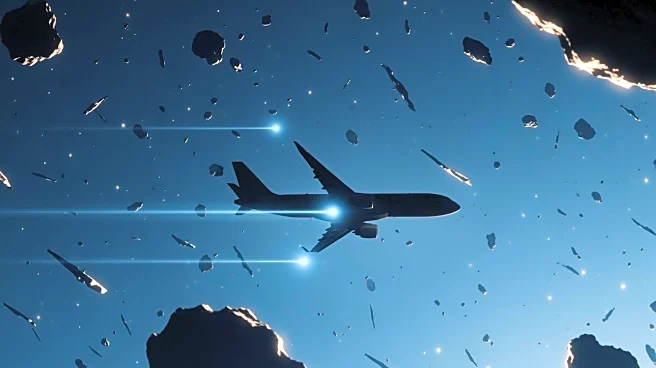
Researchers have raised concerns about the growing risk of space debris colliding with aircraft, with a study suggesting a 26 percent chance of such an event occurring in 2026. The increasing congestion
in low Earth orbit, which contains approximately 40,000 pieces of debris, is a significant factor. This debris includes defunct satellites and fragments of spacecraft, which pose a threat as they re-enter Earth's atmosphere. While most debris burns up upon re-entry, the uncontrolled nature of these events raises the risk of intersection with busy airspace. The European Space Agency's Benjamin Virgili Bastida highlighted the potential danger, comparing it to aircraft flying through volcanic ash, which can damage engines and critical systems. Recent incidents, such as a SpaceX spacecraft re-entry over Europe in 2025, have already led to temporary airspace closures, prompting calls for better coordination between space agencies and aviation regulators.
Why It's Important?
The potential for space debris to intersect with aircraft flight paths poses a significant safety risk to the aviation industry. As the volume of debris in orbit continues to grow, the likelihood of near-misses or collisions increases, which could have catastrophic consequences for air travel safety. This situation underscores the need for improved international coordination and regulatory measures to manage space traffic and mitigate risks. The aviation industry, space agencies, and governments must collaborate to develop strategies to monitor and control debris re-entry, ensuring the safety of airspace. Failure to address these challenges could lead to increased costs for airlines, potential loss of life, and disruptions in global air travel.
What's Next?
In response to the growing threat, experts emphasize the importance of enhanced coordination between space agencies and aviation regulators. This includes developing protocols for monitoring debris re-entry and implementing measures to protect aircraft from potential collisions. Additionally, there may be increased investment in technologies to track and manage space debris, as well as international agreements to regulate space traffic. The aviation industry and governments will likely need to prioritize these efforts to ensure the safety of air travel and prevent potential disasters.