







What's Happening?
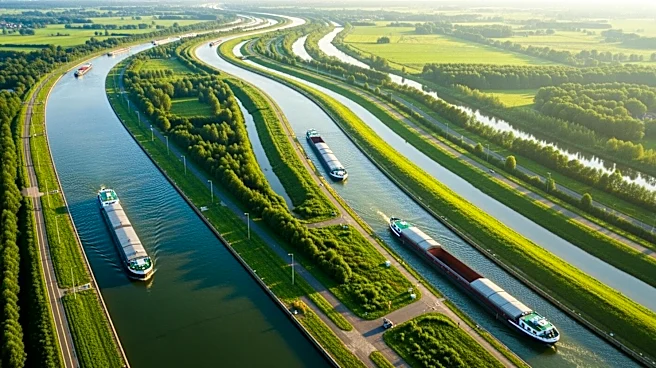
The Pinglu Canal in China is nearing completion and is expected to open by the end of 2026. This 134km inland waterway in Guangxi will significantly enhance manufacturing links between China and ASEAN countries by reducing inland shipping costs and improving
access. The canal will provide southwestern Chinese provinces with a shorter maritime route to the South China Sea, cutting transit times and logistics costs. This development is expected to strengthen supply-chain integration, particularly benefiting manufacturers in Vietnam, Thailand, and Malaysia. The canal will also facilitate the flow of raw materials into China's industrial regions, supporting sectors like electric vehicle production and tire manufacturing.
Why It's Important?
The Pinglu Canal represents a strategic infrastructure development that could reshape regional trade dynamics. By lowering transportation costs, it enhances the competitiveness of Chinese products in Southeast Asia, potentially increasing export pressure on smaller ASEAN producers. This could lead to shifts in regional manufacturing patterns, with Chinese goods becoming more price-competitive. The canal's impact on logistics and supply chains could also bolster China's role as a manufacturing hub, attracting more investment and fostering economic growth in its southwestern provinces.
What's Next?
As the canal becomes operational, stakeholders will need to navigate the economic shifts it brings. ASEAN countries may need to adapt to increased competition from Chinese products, potentially prompting policy adjustments to protect local industries. Meanwhile, Chinese manufacturers could leverage the canal to expand their market reach in Southeast Asia. The canal's success could also inspire similar infrastructure projects aimed at enhancing regional connectivity and trade.
Beyond the Headlines
The development of the Pinglu Canal highlights the broader trend of infrastructure investments aimed at deepening economic ties between China and ASEAN. It underscores the importance of strategic planning in regional development and the potential for infrastructure to drive economic integration. The canal's impact on trade and manufacturing could also influence geopolitical relations, as countries navigate the balance between cooperation and competition in the region.