






What's Happening?
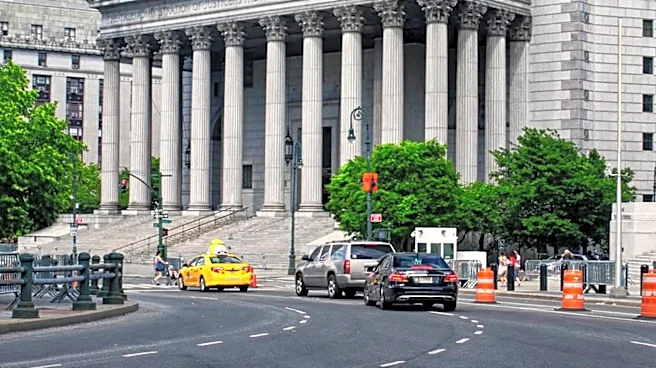
Seven employees of the New York City Health Department have filed a lawsuit against the city, alleging antisemitic discrimination, retaliation, and the creation of a hostile work environment for Jewish employees and supporters of Israel. The 110-page
complaint, filed in federal court in Manhattan, details a tense atmosphere within the agency. The lawsuit stems from several incidents, including an internal investigation launched against Jewish employees who organized an online gathering to mourn victims of a terrorist attack in Australia. These employees were questioned for nearly four months on suspicion of racial and religious discrimination, with investigators asking why they considered slogans like "Globalize the intifada" a threat to Jews. The investigation concluded without a determination of discrimination, citing differing interpretations of terms like "anti-Zionism." Additionally, the lawsuit alleges that the city denied official recognition to a Jewish employee resource group, claiming Judaism is a religion, not an ethnicity, while other identity-based groups were recognized. The complaint also highlights instances where anti-Israel sentiments were allegedly promoted through official channels and training sessions within the department.
Why It's Important?
This lawsuit brings to light significant concerns about religious discrimination and freedom of expression within a major U.S. municipal agency. It highlights the challenges Jewish employees face in expressing their identity and concerns, particularly in the context of contemporary geopolitical events. The city's alleged differential treatment of Jewish employees compared to other groups, including the denial of an employee resource group and the investigation into their mourning gathering, could set a precedent for how religious and ethnic identities are recognized and protected in public workplaces. The case also raises questions about the interpretation of antisemitism, anti-Zionism, and hate speech in professional environments, particularly when city investigators deemed terms like "Globalize the intifada" open to interpretation. The outcome of this lawsuit could influence workplace policies regarding religious accommodation, anti-discrimination training, and the handling of complaints related to antisemitism in New York City and potentially other municipalities.
What's Next?
The lawsuit seeks several remedies, including a court order for New York City to officially recognize the Jewish employee group, removal of investigation records from the employees' personnel files, and monetary damages, including punitive damages against the Equal Employment Opportunity director. The legal proceedings will likely involve discovery, depositions, and potentially a trial, during which more details about the alleged discriminatory practices within the New York City Health Department may emerge. The city will need to respond to the allegations, potentially defending its policies and actions regarding employee resource groups, internal investigations, and anti-discrimination training. The case could also prompt internal reviews and policy adjustments within the Health Department and other city agencies to address concerns about antisemitism and ensure equitable treatment of all employees. The National Jewish Advocacy Center (NJAC), representing the employees, will continue to advocate for their clients' rights and seek a favorable judgment.
Beyond the Headlines
This case delves into the complex interplay of identity politics, religious freedom, and workplace culture in a diverse urban environment. It underscores a broader societal debate about the definition and manifestation of antisemitism, particularly in relation to anti-Zionism, and how these concepts are navigated in professional settings. The lawsuit suggests a potential double standard in how different identity groups are treated and how their concerns are addressed within public institutions. It also highlights the challenges of fostering an inclusive workplace when employees feel their ethnic or religious identity is being disregarded or targeted. The allegations of anti-Israel sentiment being promoted through official channels raise questions about the politicization of public health agencies and the potential for such environments to become hostile for employees with differing viewpoints. This legal battle could contribute to a wider conversation about the boundaries of free speech, the protection of minority groups, and the responsibilities of employers to create truly equitable and respectful work environments.