





What's Happening?
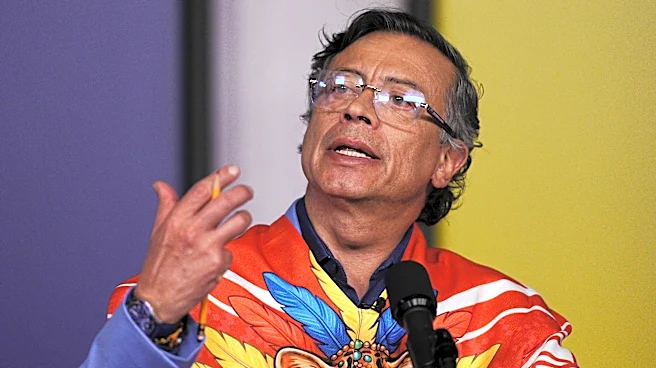
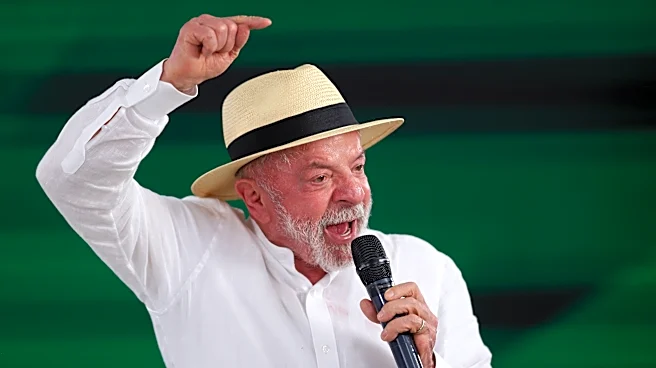
Colombia's outgoing President Gustavo Petro has reiterated claims of electoral fraud in the June presidential election, which his party narrowly lost to conservative leader Abelardo de la Espriella. In a presentation to journalists, Petro alleged that
vote counts were manipulated by programmers after being transmitted to the national registrar's headquarters. Despite these claims, international observers and Colombian electoral authorities have dismissed the allegations, confirming de la Espriella's victory by 250,000 votes. Petro has refused to acknowledge the election results, accusing electoral authorities of conducting an 'obscure' election influenced by foreign powers. He criticized the lack of metadata for tally sheets posted online, which citizens can use to verify results. Petro's accusations come as de la Espriella is set to be sworn in for a four-year term.
Why It's Important?
Petro's allegations of electoral fraud could have significant implications for Colombia's political landscape. By questioning the legitimacy of de la Espriella's presidency, Petro may deepen political polarization and undermine public confidence in the electoral process. This situation could lead to increased political instability, as Petro's supporters may refuse to recognize the new administration. Additionally, Petro's call for rural communities to form 'liberation guards' could escalate tensions in areas already affected by conflict involving the military, drug traffickers, and rebel groups. The controversy surrounding the election results highlights the challenges facing Colombia's democracy and the potential for ongoing political unrest.
What's Next?
As de la Espriella prepares to assume office, Petro's continued refusal to accept the election outcome may lead to further protests and political actions by his supporters. Ivan Cepeda, an ally of Petro, has announced plans to organize protests against the incoming president, demanding that de la Espriella renounce his dual U.S. citizenship. The new administration will need to address these challenges and work to build legitimacy and public trust. Meanwhile, Petro's future as an opposition leader could shape the political discourse in Colombia, as he continues to challenge the election's integrity.
Beyond the Headlines
Petro's allegations and the subsequent political fallout may have broader implications for Colombia's international relations and its image as a stable democracy. The claims of foreign interference and electoral manipulation could strain Colombia's diplomatic ties and affect its standing in the global community. Additionally, the situation underscores the importance of transparent and credible electoral processes in maintaining democratic governance. The controversy may prompt calls for electoral reforms and increased oversight to prevent similar disputes in future elections.