





What's Happening?
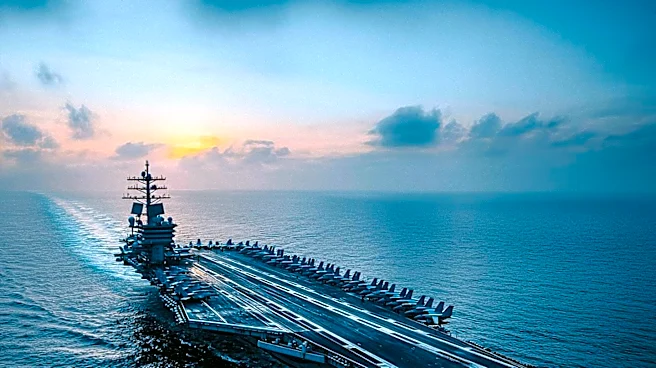
The USS Theodore Roosevelt carrier strike group is under close surveillance by Chinese sources as it transits the Western Pacific. On November 4, Chinese satellite imagery and military-tracking company MizarVision released images and data reportedly showing
the U.S. carrier operating in the region, accompanied by two other American warships. The reported formation included the guided-missile cruiser USS Chosin and the Arleigh Burke-class destroyer USS Roosevelt, though the exact composition and position have not been independently verified by official U.S. sources. This movement follows the USS Theodore Roosevelt's participation in the multinational exercise Keen Sword 27 and a port call at Yokosuka Naval Base, with its deployment continuing across the Western Pacific towards the Middle East.
Why It's Important?
The close monitoring of a U.S. carrier strike group by Chinese entities in the South China Sea highlights the ongoing strategic competition and heightened military presence of both nations in the Western Pacific. This situation is critical for U.S. interests as it underscores China's growing surveillance capabilities and its assertive posture in a region vital for international trade and security. The simultaneous operations of U.S. and Chinese carrier assets in separate areas of the Western Pacific demonstrate a complex and potentially volatile dynamic. For the U.S., maintaining freedom of navigation and projecting power in international waters is a core tenet of its foreign policy, making these interactions significant indicators of geopolitical tensions and potential flashpoints.
What's Next?
The USS Theodore Roosevelt is expected to continue its transit through the South China Sea, with its final destination reportedly the Middle East. Chinese surveillance will likely persist, with both countries maintaining an active presence and closely observing each other's naval movements. This ongoing observation and presence could lead to further reports of close encounters or increased rhetoric from either side. The U.S. Navy will continue its operational deployments in the Indo-Pacific, emphasizing its commitment to regional security and its allies. The situation underscores the need for clear communication channels between the U.S. and Chinese militaries to prevent miscalculation, even as strategic competition intensifies.
Beyond the Headlines
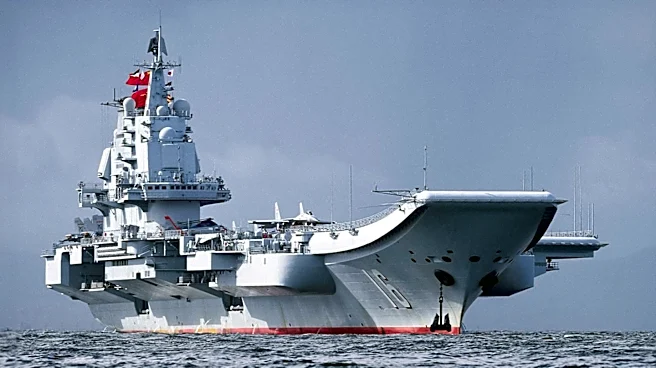
The continuous surveillance of U.S. naval assets by China reflects a broader trend of military modernization and strategic competition. China's development of its own carrier fleet, with the Fujian and Liaoning operating in separate areas, signals its ambition to project power beyond its immediate coastal waters. This dynamic raises questions about the long-term balance of power in the Indo-Pacific and the potential for a new arms race. The use of satellite imagery and military-tracking companies by China also highlights the increasing role of advanced technology in modern military intelligence and surveillance. The strategic importance of the South China Sea, with its critical shipping lanes and disputed territories, remains a central point of contention, influencing global trade and regional alliances.