
What's Happening?
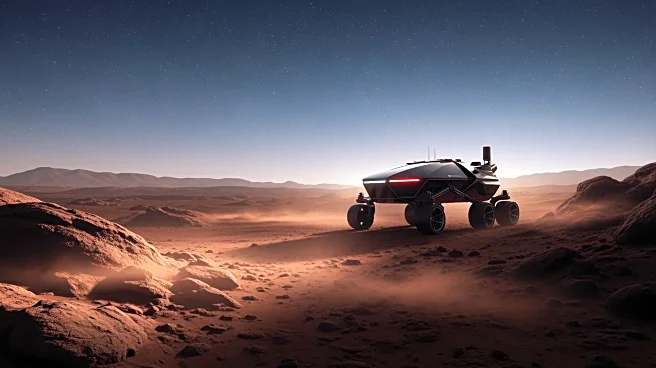
NASA's Curiosity rover, a laser-equipped, plutonium-powered robot, is scheduled to attempt a soft landing on Mars. This event is set to occur late at night for those on the west coast and pre-dawn for others
in Canada. The mission represents a significant technological challenge and a milestone in space exploration. The rover's landing is part of NASA's ongoing efforts to explore Mars and gather data that could provide insights into the planet's history and potential for supporting life. The success or failure of this mission is expected to inspire many individuals, potentially encouraging them to pursue similar challenges in various fields.
Why It's Important?
The Curiosity rover's mission is crucial for advancing our understanding of Mars, which could have implications for future human exploration and the search for extraterrestrial life. The technological advancements and data collected from this mission could inform future space missions and contribute to scientific knowledge. Additionally, the mission serves as an inspiration for aspiring scientists and engineers, highlighting the possibilities of space exploration and innovation. The success of such missions can bolster public interest and support for space programs, potentially leading to increased funding and development in the aerospace sector.
What's Next?
If the Curiosity rover successfully lands on Mars, it will begin its mission to explore the Martian surface, conducting experiments and sending data back to Earth. This data will be analyzed by scientists to gain insights into the planet's geology and climate. The mission's outcomes could influence future Mars missions, including potential human exploration. NASA and other space agencies will likely continue to monitor and support the rover's activities, while also planning subsequent missions based on the findings and technological advancements achieved through Curiosity's journey.