





What's Happening?
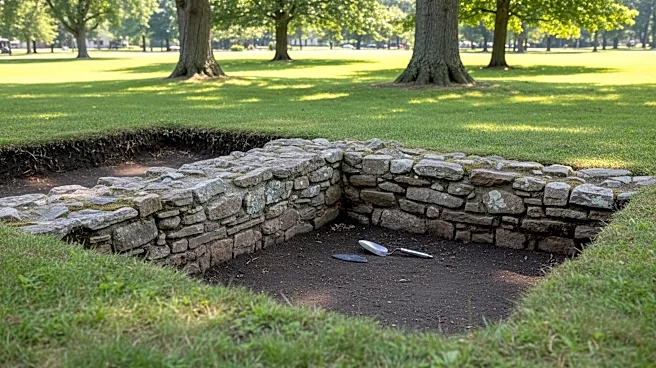
Archaeologists have discovered the remains of an 18th-century bake house on the Lebanon Town Green in Connecticut, a site historically linked to the Revolutionary War. The bake house, used to provide bread for French troops aiding the American Revolution,
was uncovered during an excavation in June. The site yielded a few artifacts, including a burned gun flint from the Revolutionary War era. This discovery confirms long-held beliefs about the location of a French bake house, previously marked by a commemorative plaque. The excavation is part of a broader archaeological project in Lebanon, coinciding with the 250th anniversary of the American Revolution.
Why It's Important?
The discovery of the bake house is significant as it provides tangible evidence of French support during the American Revolution, highlighting the international alliances that were crucial to the American victory. This find enriches the historical narrative of the Revolutionary War, offering insights into the daily lives and logistical operations of the troops. It also underscores the importance of preserving historical sites, as they offer valuable educational opportunities and cultural heritage. The project contributes to a deeper understanding of the Revolutionary War's impact on local communities and the broader historical context of U.S. independence.
What's Next?
Further archaeological testing is planned for the fall to better understand the site and its historical context. Researchers aim to identify the structure's style and explore the possibility of a complex of structures in the area. This ongoing investigation may reveal more about the scale of Revolutionary War activities in Lebanon and the role of French troops. The findings could lead to enhanced preservation efforts and educational programs, fostering greater public engagement with American history.