



What's Happening?
The United States has set a June deadline for Ukraine and Russia to reach a peace agreement to end the nearly four-year conflict. President Volodymyr Zelenskyy announced the deadline, emphasizing that the U.S. will likely pressure both sides to meet it.
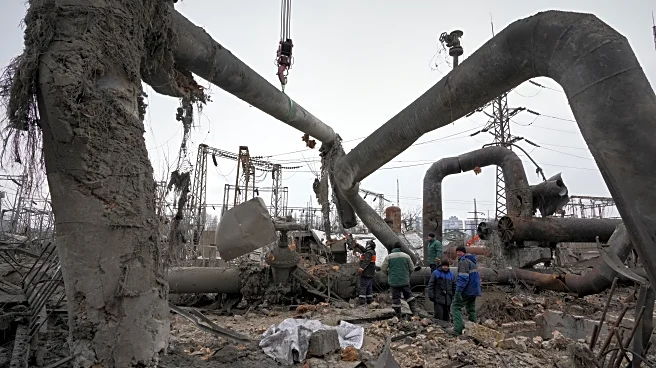
The conflict has seen continued Russian strikes on Ukrainian energy infrastructure, leading to power outages and reduced output from nuclear power plants. The U.S. has proposed holding the next round of trilateral talks in Miami, aiming to resolve key issues such as the status of the Donbas region and the management of the Russian-held Zaporizhzhia nuclear plant. Despite ongoing negotiations, significant challenges remain, with both sides holding firm on their positions.
Why It's Important?
The U.S.-imposed deadline underscores its active role in seeking a resolution to the Ukraine-Russia conflict, which has significant implications for European security and international relations. A successful peace agreement could stabilize the region, reduce military tensions, and improve economic conditions in Ukraine. However, failure to reach an agreement could lead to increased hostilities and further destabilize the region. The conflict has already had a profound impact on Ukraine's infrastructure and economy, and a resolution is crucial for the country's recovery and future development. The international community is closely watching these negotiations, as their outcome could influence global geopolitical dynamics.
What's Next?
The upcoming trilateral talks in Miami will be crucial in determining the path forward for the peace process. The U.S. will continue to play a mediating role, with the potential to apply diplomatic and economic pressure on both Ukraine and Russia. The success of these talks could pave the way for a comprehensive peace agreement, while failure could result in prolonged conflict and instability. The international community will be monitoring the situation closely, as the outcome could have far-reaching implications for global security and diplomatic relations.