


What's Happening?
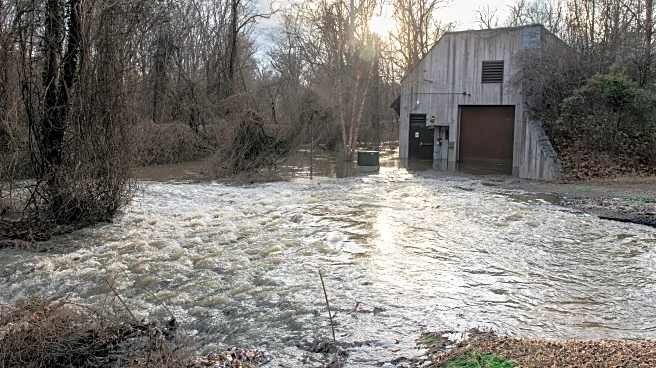
President Donald Trump has criticized Maryland Governor Wes Moore for what he describes as a delayed response to a significant sewage spill into the Potomac River. The incident, which occurred due to a rupture in a 1960s-era pipe known as the Potomac Interceptor,
has led to millions of gallons of wastewater contaminating the river. The pipe is managed by DC Water, a federally regulated utility under the oversight of the U.S. Environmental Protection Agency (EPA). Despite this, Trump has accused Moore of mismanagement and has ordered federal authorities to intervene. Moore's spokesperson, Ammar Moussa, countered that the Trump administration has not fulfilled its responsibilities in addressing the spill. The situation has been further complicated by a partial government shutdown affecting the Department of Homeland Security, which includes the Federal Emergency Management Agency (FEMA), a key player in the response coordination.
Why It's Important?
The sewage spill into the Potomac River represents a significant environmental concern, potentially affecting water quality and public health in the region. The political clash between President Trump and Governor Moore highlights ongoing tensions between federal and state authorities over infrastructure management and environmental protection. The incident underscores the challenges of maintaining aging infrastructure and the need for effective coordination between different levels of government. The response to this environmental crisis could have broader implications for public trust in government agencies and their ability to manage critical infrastructure and environmental disasters.
What's Next?
The emergency repair of the Potomac Interceptor is expected to take four to six weeks, during which time efforts will focus on addressing the immediate damage and environmental restoration. The ongoing political dispute may influence future federal-state collaborations on infrastructure projects. Additionally, the partial government shutdown could impact the availability of federal resources needed for the cleanup. As the situation develops, stakeholders will likely continue to monitor the effectiveness of the response and the potential long-term environmental impacts on the Potomac River and surrounding areas.