







What's Happening?
The Democratic Republic of Congo is experiencing a severe Ebola outbreak, which has become the second-largest on record. The official death toll has surpassed 1,500, with the number of cases reported rising to 3,532. The outbreak is spreading faster than
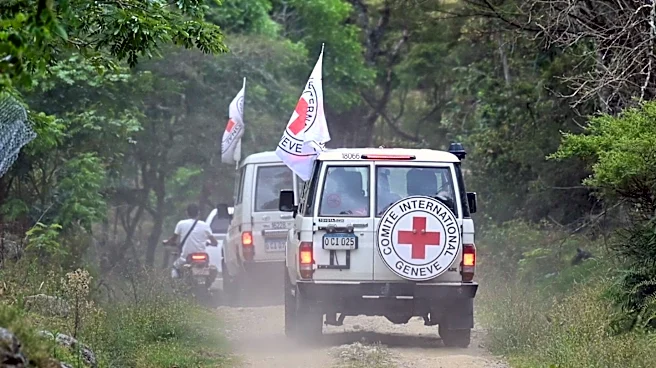
previous incidents, and the true number of fatalities is believed to be much higher. Efforts to contain the virus are being hampered by poor planning, logistical issues, and insecurity in the region. The outbreak is caused by the rare Bundibugyo strain of the Ebola virus, which currently has no approved vaccine or treatment. Health responders are facing challenges due to insecurity in eastern Congo, where numerous armed groups operate, and deep foreign aid cuts have stretched resources.
Why It's Important?
The rapid spread of the Ebola virus in the Democratic Republic of Congo poses a significant threat to public health and safety in the region. The outbreak's severity highlights the need for increased international attention and support to contain the epidemic. The lack of an approved vaccine or treatment for the Bundibugyo strain complicates efforts to manage the outbreak. The situation underscores the importance of addressing logistical and security challenges to ensure effective response efforts. The outbreak's impact extends beyond health, affecting economic stability and social structures in the region.
What's Next?
Efforts to contain the outbreak will require substantial international support and funding. The Africa CDC has estimated that $1.4 billion is needed to manage the epidemic, which is three times its earlier estimate. The U.S. travel ban restricting American citizens in Congo from traveling to the U.S. on commercial flights may affect the supply of aid workers. Organizations like Samaritan’s Purse, which rely on U.S. responders, may have to scale back operations due to quarantine orders. Continued surveillance and community engagement are crucial to controlling the outbreak.
Beyond the Headlines
The outbreak in the Democratic Republic of Congo highlights the broader challenges of managing infectious diseases in regions with political instability and limited resources. The reliance on traditional healers and community mistrust of health responders complicate efforts to break the chain of transmission. The situation calls for a reevaluation of global health strategies and the need for sustainable solutions to prevent future outbreaks. The ethical implications of foreign aid cuts and travel restrictions also warrant consideration.