



What's Happening?
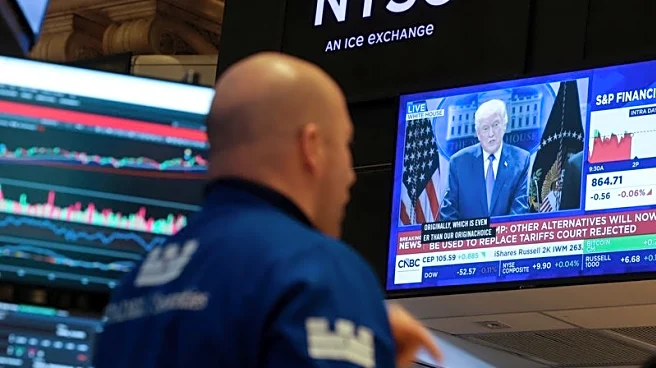
The U.S. Supreme Court has overturned President Trump's tariffs, ruling that he exceeded his authority under the 1977 law used to justify these duties. This decision could require the government to refund between $150 billion to $200 billion to U.S. and
foreign companies that paid these tariffs. The ruling has caused fluctuations in the stock market, with the S&P 500 initially rising before stabilizing. The decision is expected to benefit sectors like automakers and consumer goods importers, which could see a boost from the removal of these tariffs.
Why It's Important?
The Supreme Court's decision has significant implications for U.S. trade policy and economic stability. The potential refunds could strain government finances, increasing the federal deficit and impacting the U.S. Treasury's ability to manage its $30 trillion debt. This could lead to higher yields on government bonds, affecting borrowing costs and investor confidence. The ruling also raises questions about the future of U.S. trade policy, as the administration may seek alternative legal avenues to reimpose tariffs, affecting industries reliant on imported goods.
What's Next?
The administration may explore other legal frameworks to reintroduce tariffs, which could lead to further legal challenges and market uncertainty. Companies affected by the tariffs may pursue legal action to secure refunds, adding complexity to the situation. Investors and market analysts will closely monitor the administration's response and its impact on the economy, particularly in sectors sensitive to trade policy changes.