



What's Happening?
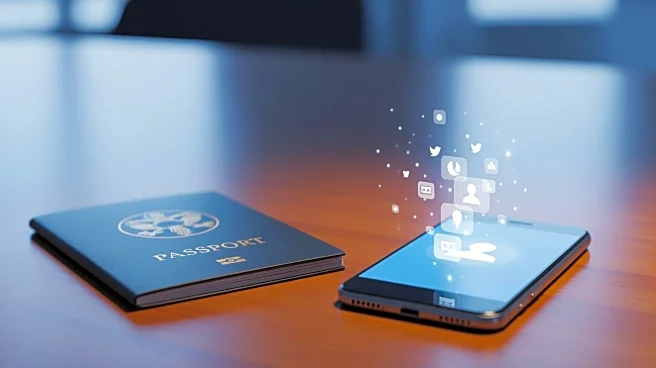
The U.S. State Department has introduced a new policy requiring social media reviews for applicants of certain visas, effective December 15, 2025. This policy extends previous online review requirements, which were limited to foreign students and exchange
visitors, to include all H-1B visa applicants and their dependents. The State Department has instructed applicants to set their social media profiles to 'public' to facilitate these reviews. The policy is part of the Trump Administration's efforts to enhance national security and public safety through the visa process. The announcement follows a recent $100,000 annual application fee for H-1B visas introduced by President Trump. The policy has sparked concerns about its implications for First Amendment rights, as courts have historically upheld these rights for individuals lawfully within U.S. borders, regardless of citizenship status.
Why It's Important?
The implementation of social media reviews for visa applicants is significant as it could impact the ability of American businesses to hire foreign workers, particularly in specialty occupations that rely on H-1B visas. The expanded review process may delay visa applications, causing disruptions for companies seeking to employ skilled foreign workers. Additionally, the policy raises concerns about potential infringements on free speech, as it is unclear what specific online content could disqualify an applicant. Immigration attorneys have expressed uncertainty about advising clients due to the lack of detailed guidelines. The policy also highlights the broader debate over national security versus individual rights, with some arguing that the U.S. has the right to impose such measures to protect its citizens.
What's Next?
The new policy may lead to legal challenges, particularly concerning its impact on free speech rights. Immigration attorneys and civil rights groups might seek clarification or contest the policy in court. The administration's approach to visa reviews could also influence future immigration policies and the balance between security measures and individual freedoms. Businesses reliant on foreign talent may need to adjust their hiring strategies or advocate for policy changes to mitigate potential disruptions. The State Department and other government agencies may continue to refine the policy based on feedback and legal outcomes.
Beyond the Headlines
The policy's implications extend beyond immediate visa processing delays. It could set a precedent for how digital footprints are used in immigration decisions, potentially affecting privacy rights and the scope of government surveillance. The policy may also influence international perceptions of the U.S. as a destination for skilled workers, impacting its competitiveness in the global talent market. Furthermore, the policy underscores the ongoing tension between national security priorities and the protection of civil liberties, a debate that is likely to persist in the context of evolving digital landscapes and security threats.