
What's Happening?
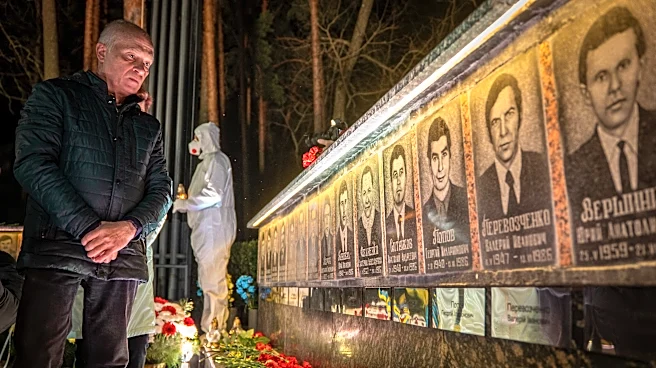
North Korea has inaugurated a memorial museum in Pyongyang to honor its soldiers who died fighting alongside Russian forces in the Russia-Ukraine conflict. The museum's opening marks the one-year anniversary
of the end of an operation to liberate Russia's Kursk region from Ukrainian forces. North Korean leader Kim Jong Un attended the ceremony, which was also attended by high-ranking Russian officials, including Vyacheslav Volodin, the speaker of the State Duma, and Defense Minister Andrei Beloussov. During the event, Kim paid tribute to the fallen soldiers and emphasized the heroism of the North Korean and Russian forces. The North Korean government has not disclosed the exact number of troops deployed, but South Korean intelligence estimates that around 15,000 North Korean soldiers were sent, with approximately 2,000 casualties.
Why It's Important?
The establishment of the memorial museum underscores the deepening military and political ties between North Korea and Russia. This development is significant as it highlights North Korea's strategic alignment with Russia amidst the ongoing conflict in Ukraine. The collaboration between the two nations could have broader implications for regional security dynamics, particularly concerning North Korea's military capabilities. The potential for Russia to provide North Korea with advanced military technology in exchange for support raises concerns among Western nations, including the United States and South Korea. This partnership may also influence the geopolitical landscape, as North Korea continues to prioritize its relationship with Russia over other international engagements.
What's Next?
Looking ahead, North Korea and Russia are expected to further solidify their military cooperation. Russian Defense Minister Andrei Beloussov indicated readiness to sign a military cooperation plan with North Korea for the 2027-2031 period. This agreement could involve joint military exercises, technology transfers, and other forms of collaboration. The international community, particularly the U.S. and its allies, will likely monitor these developments closely, as they could impact the balance of power in the region. Additionally, there may be diplomatic efforts to address the potential proliferation of military technology and its implications for global security.
Beyond the Headlines
The memorial museum serves not only as a tribute to fallen soldiers but also as a symbol of the ideological and strategic partnership between North Korea and Russia. This alliance challenges the existing international order and poses questions about the future of global alliances. The collaboration between these two nations may encourage other countries to reassess their foreign policy strategies and alliances. Furthermore, the involvement of North Korean troops in the conflict provides them with valuable combat experience, which could enhance North Korea's military capabilities in future engagements.