







What's Happening?
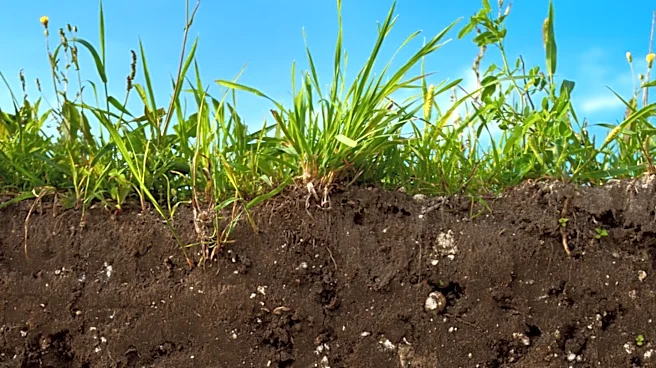
A recent study has explored how soil microbiomes and neighboring plants influence plant growth and community dynamics. The research focused on plant-soil feedback using six grassland species grown in different soil conditions. It was found that plants experienced
stronger growth suppression when grown alone in sterile soil, but this was alleviated by microorganisms in soils with plant legacies, especially heterospecific ones. The study revealed that neighboring plants could restructure the root-associated bacterial community of focal plants, leading to improved growth. This microbial convergence was found to predict growth responses, suggesting that neighbor-induced bacterial community shifts play a significant role in plant interactions.
Why It's Important?
The findings of this study have significant implications for understanding plant ecology and the role of soil microbiomes in plant interactions. By revealing how microbial communities can mediate plant growth and competition, the research provides insights into ecosystem dynamics and biodiversity. This knowledge could inform agricultural practices, particularly in enhancing crop yields and sustainability by leveraging beneficial plant-soil interactions. Additionally, understanding these mechanisms could aid in the conservation of grassland ecosystems, which are vital for carbon sequestration and biodiversity.
Beyond the Headlines
The study highlights the complex interplay between plants and their environment, emphasizing the importance of microbial communities in ecological processes. This research could lead to a paradigm shift in how we approach plant cultivation and ecosystem management, focusing on fostering beneficial microbial interactions. The ethical considerations of manipulating soil microbiomes for agricultural purposes may also arise, prompting discussions on sustainable and responsible practices.