
What's Happening?
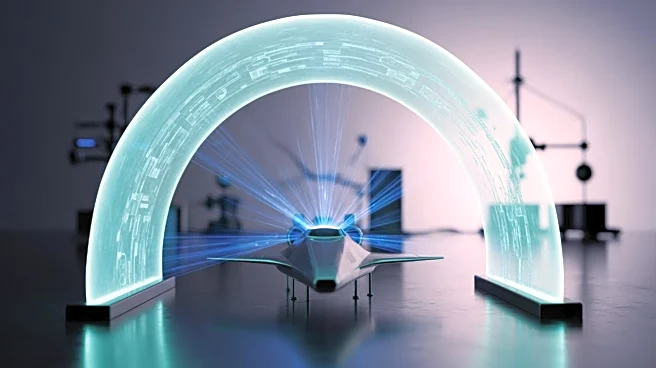
Researchers at the University of Colorado at Boulder have developed a pioneering plasma tunnel designed to simulate the extreme conditions spacecraft face during reentry into Earth's atmosphere. This facility, led by Hisham Ali and his team, is one of the first
of its kind globally, allowing scientists to test materials, heat shields, and sensors under intense heat and pressure. The plasma tunnel can reach temperatures up to 9,000 degrees Fahrenheit, hotter than the surface of the sun, replicating the shockwaves experienced during hypersonic flight. This innovation is crucial for testing spacecraft technologies before they are deployed in actual missions, especially as space tourism becomes more prevalent. The facility also has the capability to simulate conditions on other planets, such as Mars, by injecting carbon dioxide to mimic its atmosphere.
Why It's Important?
The development of the plasma tunnel is significant for the future of space exploration and safety. As space missions increase in frequency, particularly with the rise of space tourism, ensuring the safety of spacecraft during reentry is paramount. The ability to test and improve materials and technologies in a controlled environment helps mitigate risks associated with the intense conditions of reentry. This research not only enhances the safety of astronauts but also supports the advancement of space tourism by making it safer for human passengers. Additionally, the facility's ability to simulate other planetary atmospheres opens new possibilities for interplanetary exploration, providing insights into how spacecraft might behave when entering different environments.
What's Next?
Looking forward, the research team at CU Boulder is exploring innovative concepts to further improve spacecraft maneuverability during reentry. One such idea involves using powerful magnets to manipulate plasma shockwaves, potentially allowing spacecraft to change their trajectory in the harsh conditions of reentry. This approach could revolutionize spacecraft control, enhancing both safety and maneuverability. As the facility continues to test new materials and technologies, it will play a crucial role in the development of safer and more efficient spacecraft for future missions, both on Earth and beyond.