
What's Happening?
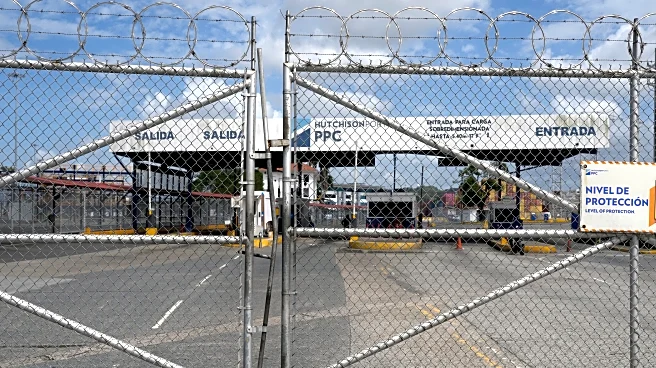
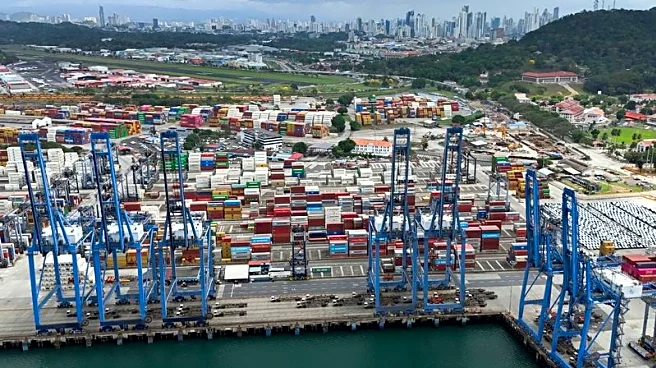
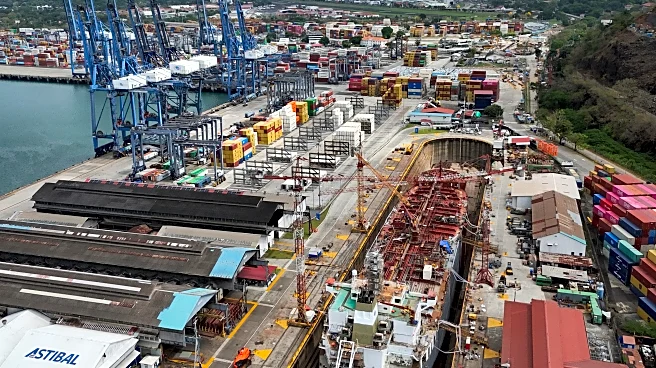
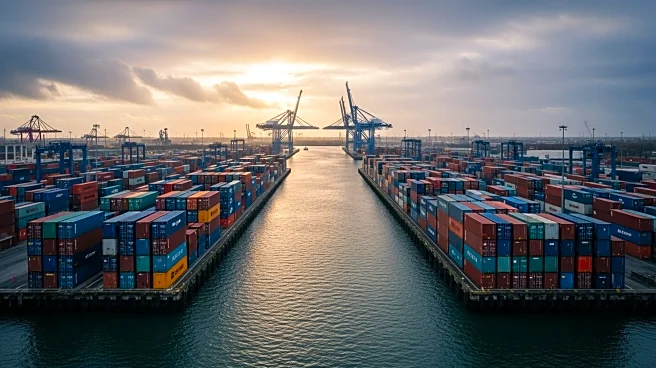
The Panamanian government has taken control of two key ports at the entrances of the Panama Canal, following a Supreme Court ruling that declared the concession held by a Hong Kong-based company, CK Hutchison, unconstitutional. The decree, issued on Monday,
allows the Panama Maritime Authority to occupy the Balboa and Cristobal terminals for 'reasons of urgent social interest.' This includes all movable property such as cranes, vehicles, and computer systems. CK Hutchison, which has operated these ports for decades, ceased operations after government officials took over, threatening criminal prosecution. The move is part of a broader geopolitical context involving U.S.-China relations, as President Trump previously accused China of 'running the Panama Canal.'
Why It's Important?
This development is significant as it highlights the geopolitical tensions between the U.S. and China, with Panama caught in the middle. The seizure of the ports could affect international trade routes and logistics, given the strategic importance of the Panama Canal. The involvement of CK Hutchison, a major Hong Kong-based company, underscores the economic implications for China, which had previously intervened to halt a sale of the ports to a consortium including U.S. investment firm BlackRock. The ruling and subsequent government action may also influence future foreign investments in Panama, as legal and political stability are crucial for international business operations.
What's Next?
The immediate future may involve legal challenges from CK Hutchison or diplomatic negotiations, as the company and potentially the Chinese government seek to address the seizure. The U.S. may also respond, given its strategic interests in the region. The situation could lead to further scrutiny of foreign concessions in Panama and possibly influence the country's legal framework regarding foreign investments. Additionally, the impact on global shipping and trade logistics will be closely monitored, as stakeholders assess the implications for supply chains that rely on the Panama Canal.