





What's Happening?
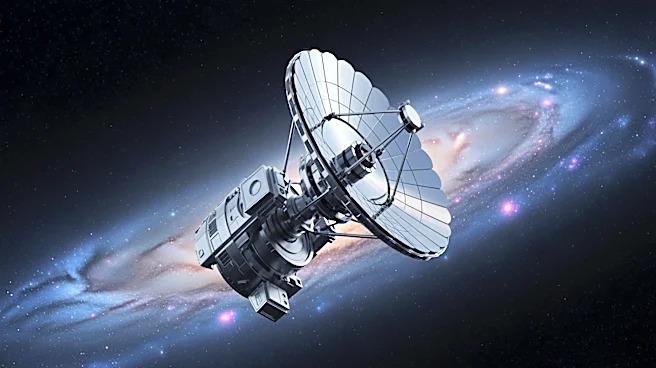
NASA's Nancy Grace Roman Space Telescope is set to significantly expand the search for exoplanets, potentially discovering around 100,000 new worlds. This mission will explore largely uncharted areas of the Milky Way, offering a broader view of planetary
systems. The telescope will employ techniques such as planetary transits and microlensing to detect these exoplanets. The transit method is effective for finding large, hot planets, while microlensing can detect planets similar to Earth and Mars, even in distant orbits. This mission aims to provide insights into how planets form across different regions of the galaxy, potentially revealing new information about the origins of our own solar system.
Why It's Important?
The Roman Telescope's mission is crucial for understanding the diversity and formation of planetary systems in the Milky Way. By exploring new regions, it could provide data on how different environments affect planet formation, offering clues about the conditions that led to the development of our solar system. This could have significant implications for the study of planetary science and the search for life beyond Earth. The mission's findings will be publicly available, allowing for widespread scientific collaboration and potentially guiding future space exploration missions.
What's Next?
The Roman Telescope is expected to begin its mission soon, with scientists preparing by creating synthetic data and using machine learning to filter out false positives. The data collected will help refine models of planet formation and guide future observations by other telescopes, such as the James Webb Space Telescope. The mission's success could lead to further exploration of the Milky Way's central bulge and other underexplored regions, enhancing our understanding of the galaxy's structure and evolution.