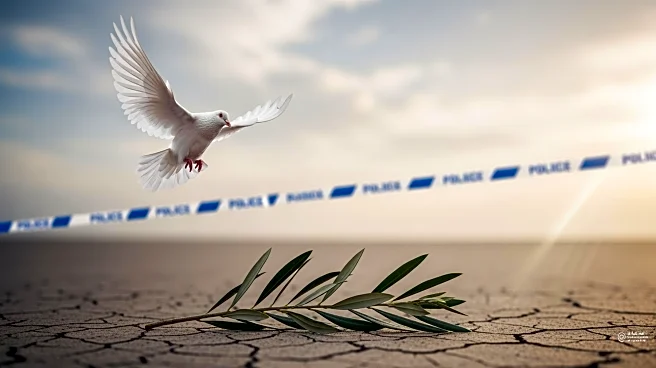




What's Happening?
Israeli officials have successfully recovered the remains of Ran Gvili, the last Israeli hostage held in Gaza. This development marks a significant step forward in the ongoing ceasefire process between Israel and Gaza. The return of Gvili's remains was
a critical condition set by Israel to advance to the next phase of the ceasefire agreement. With this condition met, there is potential for the reopening of the Rafah border crossing, which connects Egypt and Gaza, facilitating movement for people entering and exiting the enclave. Diana Buttu, a human rights lawyer and former legal advisor to Palestinian negotiators, discussed the implications of these developments, highlighting the potential for easing tensions and improving humanitarian conditions in the region.
Why It's Important?
The recovery of Ran Gvili's remains and the subsequent progression of the ceasefire are pivotal in stabilizing the region. The reopening of the Rafah border crossing could significantly impact the humanitarian situation in Gaza by allowing for the movement of people and goods, which has been severely restricted. This development may also influence diplomatic relations and negotiations between Israel and Palestinian authorities, potentially leading to more sustainable peace efforts. The situation remains delicate, with both sides needing to adhere to the terms of the ceasefire to prevent further escalation. The international community is closely monitoring these developments, as they could set a precedent for conflict resolution in other regions.
What's Next?
With the ceasefire moving into its next phase, stakeholders will likely focus on ensuring compliance with the agreement's terms. The reopening of the Rafah border crossing will be a critical test of the ceasefire's durability. Both Israeli and Palestinian authorities, along with international mediators, will need to work collaboratively to maintain peace and address any violations swiftly. Humanitarian organizations may also increase their presence in the region to provide aid and support to affected populations. The success of these efforts could pave the way for more comprehensive peace talks and long-term solutions to the conflict.