




What's Happening?
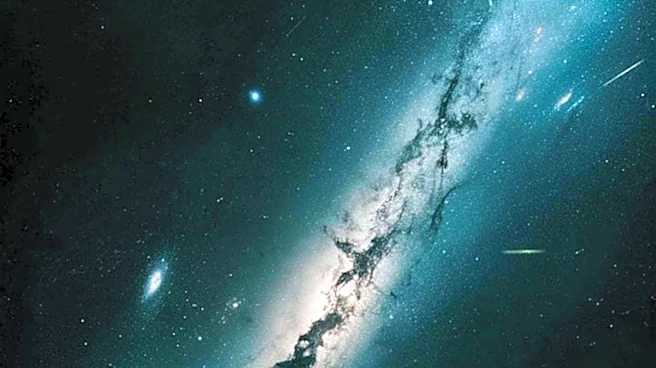
Astronomers have identified a string of galaxies, including a dwarf galaxy named DF9, that appear to lack dark matter, a crucial component typically found in galaxies. This discovery, reported in The Astrophysical Journal, adds to previous findings of similar
galaxies, DF2 and DF4, in the NGC 1052 field. These galaxies, located nearly 70 million light-years from Earth, challenge the conventional understanding that dark matter acts as a cosmic glue, holding galaxies together. The research, conducted using the Keck Cosmic Web Imager, suggests that these galaxies may have formed through violent galactic collisions, which could have stripped them of dark matter. This phenomenon is likened to the Bullet Cluster, a well-known example of galaxy clusters colliding and separating dark matter from visible matter.
Why It's Important?
The discovery of galaxies without dark matter has significant implications for our understanding of the universe. Dark matter is believed to make up about 85% of the universe's mass, and its presence is essential for explaining the movement of stars within galaxies. The existence of galaxies like DF9, DF2, and DF4 suggests that dark matter may not be as universally present as previously thought, prompting a reevaluation of cosmic formation theories. This could impact astrophysics and cosmology, potentially leading to new models of galaxy formation and evolution. The findings also highlight the complexity of galactic interactions and the potential for more such discoveries, which could reshape our understanding of the universe's structure.
What's Next?
Further research is planned to explore the origins and characteristics of these dark matter-deficient galaxies. Astronomers are conducting follow-up observations with other observatories, including the new MOTHRA facility in Chile, which promises deeper insights into these phenomena. The ongoing study aims to find additional evidence of the collisional origins of these galaxies, such as leftover gas from past collisions. These efforts could provide a more comprehensive understanding of how such galaxies form and evolve, potentially leading to breakthroughs in the study of dark matter and cosmic structures.