





What's Happening?
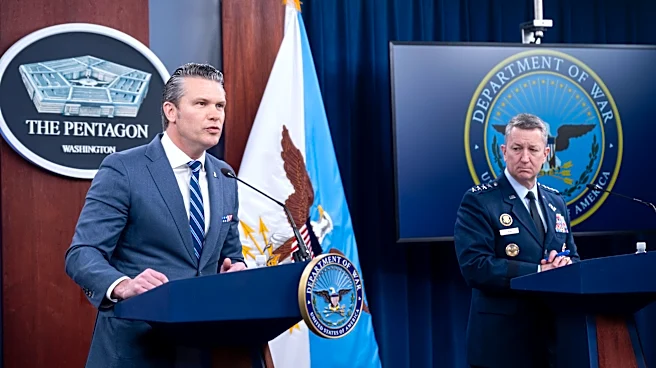
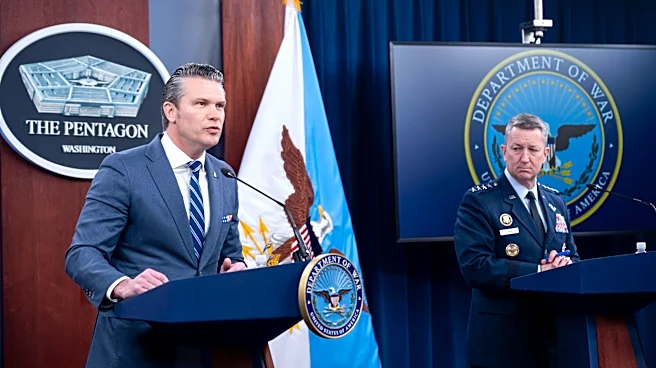
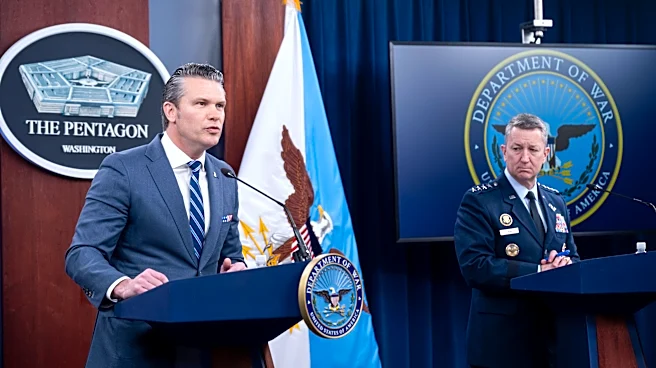
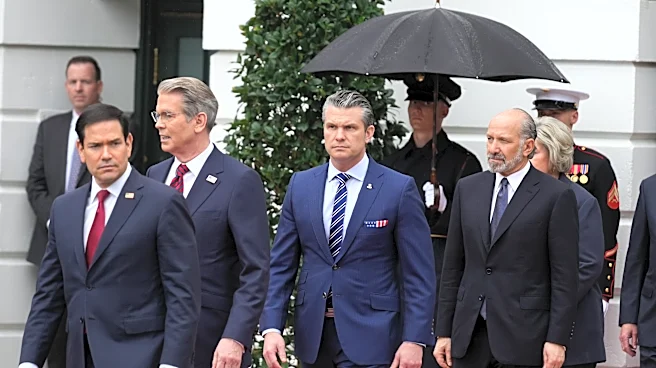
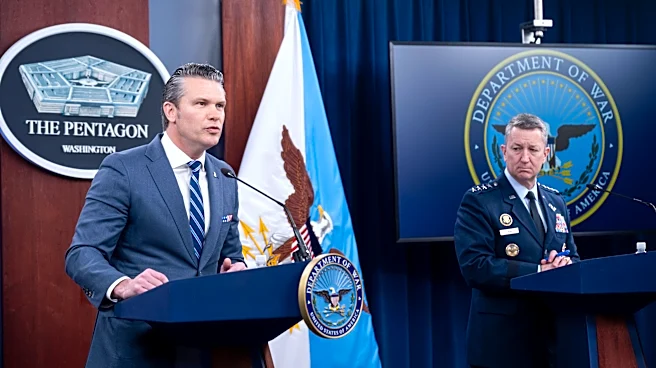
The U.S. government has spent approximately $25 billion on the conflict with Iran, primarily on munitions. This expenditure was revealed during a legislative hearing before the House Armed Services Committee, where top Pentagon officials, including Defense
Secretary Pete Hegseth, discussed the costs associated with Operation Epic Fury. The U.S. military has heavily relied on sophisticated cruise missiles like the Joint Air-to-Surface Standoff Missile (JASSM) and Tomahawk missiles, consuming thousands of these precision-guided munitions in the early weeks of the conflict. The high consumption rates have led to a significant depletion of stockpiles, with the Pentagon shifting to cheaper Joint Direct Attack Munitions (JDAMs) to manage costs.
Why It's Important?
The substantial financial outlay for munitions underscores the high cost of modern warfare and the strategic challenges faced by the U.S. military. The depletion of missile stockpiles raises concerns about the sustainability of military operations and the ability to respond to future conflicts. The financial burden also highlights the need for efficient resource management and potential budgetary adjustments to support ongoing and future military engagements. The situation may influence defense policy and procurement strategies, as well as impact defense contractors involved in the production of these munitions.
What's Next?
The Trump Administration plans to submit a supplemental budget request to Congress to cover the expenses related to the conflict. This request will be formulated through the White House once a full assessment of the conflict's cost is completed. Meanwhile, diplomatic efforts are underway to seek a resolution to the conflict, with a temporary ceasefire in place to allow for negotiations. The U.S. continues to enforce blockades and seize Iranian-linked commercial ships, maintaining pressure on Iran while diplomatic discussions proceed.