










What's Happening?
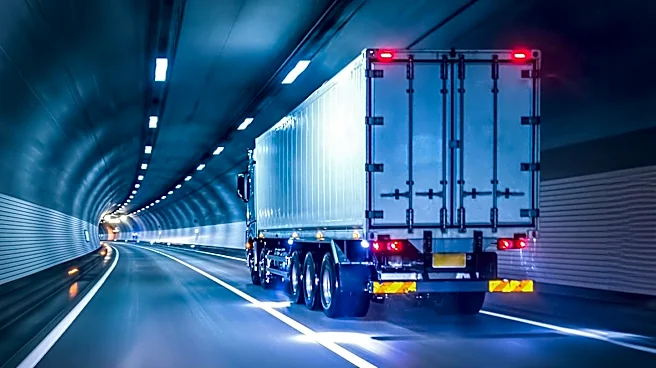
The U.S. Department of Transportation (DOT) has announced the allocation of $61.7 million in grants aimed at expanding truck parking capacity across key freight corridors in the United States. This funding, distributed through the DOT's Better Utilizing
Investments to Leverage Development (BUILD) grant program, targets improvements in four states. Illinois will receive $13.2 million to add 45 rest area spaces, while Kentucky is set to receive $25 million to enhance truck parking at seven rest areas and implement real-time parking information systems. Mississippi will benefit from $22.1 million to add 54 rest area spaces and similar information systems, and Wyoming will receive $1.4 million to improve winter parking options for trucks. The initiative addresses the chronic shortage of truck parking, which poses safety risks and affects driver efficiency.
Why It's Important?
The investment is crucial for the trucking industry, which has long struggled with insufficient parking facilities. According to a DOT study, 98% of truck drivers face difficulties in finding safe parking, leading to an average loss of 56 minutes of drive time per day, as reported by the American Trucking Research Institute (ATRI). By expanding parking availability and introducing real-time information systems, the initiative aims to enhance driver safety, reduce lost productivity, and improve overall freight operations. This development is expected to lower costs for consumers and ease the challenges faced by professional drivers, thereby supporting the efficiency of the national supply chain.
What's Next?
The success of this initiative could prompt further investments in truck parking infrastructure. The American Trucking Associations (ATA) has expressed support for the project and urged Congress to approve an additional $200 million for truck parking in the upcoming appropriations bill. If approved, this funding could further alleviate parking shortages and enhance the safety and efficiency of the trucking industry. Stakeholders, including state governments and trucking associations, are likely to monitor the implementation of these projects closely to assess their impact on the industry.