




What's Happening?
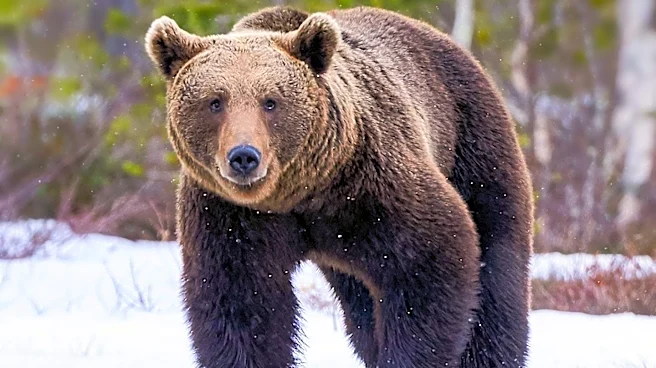
On the morning of October 1, a landowner in the Trego area of Montana shot and killed a male grizzly bear after a close encounter on his property. The landowner, who was uninjured, had gone outside to investigate noises when he encountered the bear at close range.
The U.S. Fish and Wildlife Service and Montana Fish, Wildlife & Parks (FWP) responded to the scene to investigate the incident. FWP Director Christy Clark expressed relief that the landowner was unharmed and highlighted that fall is a period of increased bear activity as they enter hyperphagia, a phase of intense feeding to build fat reserves before winter denning. This heightened activity can lead to more conflicts with humans.
Why It's Important?
This incident underscores the critical importance of bear safety and attractant management in regions where humans and grizzly bears coexist. The killing of a grizzly bear, a protected species, highlights the potential for dangerous encounters and the need for individuals to be prepared to defend themselves. For residents in bear country, this event serves as a stark reminder of the risks and the necessity of securing food sources and other attractants to prevent bears from approaching human dwellings. The FWP's emphasis on hyperphagia provides crucial context, explaining why bears are more active and potentially aggressive during this time, thereby increasing the likelihood of such conflicts. This situation impacts public safety and wildlife conservation efforts.
What's Next?
Montana Fish, Wildlife & Parks will continue to educate the public on bear safety measures, particularly during the fall season when bears are most active. Residents in bear country are strongly encouraged to implement FWP's recommendations for securing attractants, such as storing garbage in bear-resistant bins, cleaning BBQs thoroughly, and protecting fruit trees and livestock with electric fences. The U.S. Fish and Wildlife Service and FWP will likely continue their investigation into the specific circumstances of this incident. The broader community response will involve increased awareness campaigns and potentially more stringent enforcement of attractant management guidelines to minimize future human-bear conflicts and ensure both human safety and grizzly bear conservation.
Beyond the Headlines
The killing of a grizzly bear in self-defense in Montana brings to light the complex challenges of managing wildlife populations in areas of human expansion. Grizzly bears, as a federally protected species, represent a significant conservation success, but their recovery also means more frequent interactions with humans. This incident raises questions about the balance between human safety and wildlife protection, and the effectiveness of current mitigation strategies. It also highlights the psychological impact on residents living in close proximity to large predators, fostering a sense of vigilance and sometimes fear. The long-term implications include ongoing debates about bear management policies, habitat preservation, and the need for innovative solutions to promote coexistence in a changing landscape.