






What's Happening?
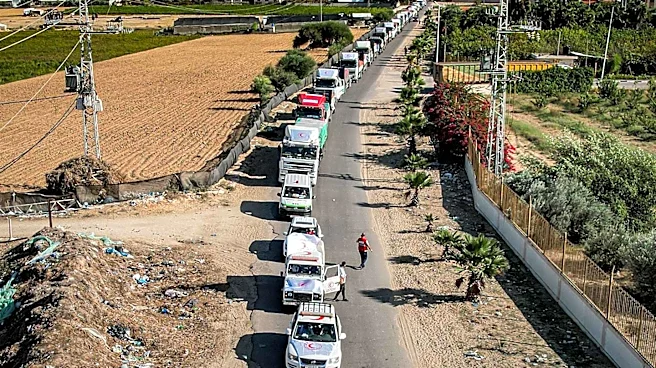
Members of the UAE's Future Leaders Empowerment Programme are actively involved in humanitarian operations aimed at supporting Palestinians in Gaza. This engagement is part of a field program conducted in Al Arish, Egypt. The participants are working
at the UAE humanitarian aid logistics center, where they are responsible for preparing and packing aid trucks. These trucks are then transported towards the Rafah Crossing as part of 'Operation Chivalrous Knight 3'. In addition to logistics, the delegation visited the UAE Floating Hospital. During their visit, they received briefings on the medical treatment provided to Palestinian patients and injured individuals. They also distributed meals and inaugurated a library for patients undergoing treatment at the facility. The program also included visits to UAE desalination plants, which are crucial for supplying water to Palestinians in Gaza, and to the Rafah Crossing to observe the aid transportation process.
Why It's Important?
This initiative highlights the UAE's commitment to providing humanitarian assistance to the Palestinian people in Gaza, demonstrating a direct and hands-on approach to aid delivery. The involvement of future leaders in such operations is significant as it provides them with practical experience in humanitarian work and the complexities of relief operations. This exposure can foster a deeper understanding of international humanitarian efforts and potentially shape future policies and strategies for aid distribution. The establishment of a library at the floating hospital, alongside meal distribution, underscores a holistic approach to humanitarian aid that extends beyond immediate medical and logistical support, addressing the psychological and social well-being of patients. The focus on desalination plants also points to critical long-term infrastructure support for basic necessities like water in a region facing severe resource constraints.
What's Next?
The Future Leaders Empowerment Programme is designed to continue providing participants with practical experience in humanitarian work, suggesting ongoing involvement in relief operations. The insights gained by these future leaders could influence the development and implementation of more effective and sustainable humanitarian aid strategies in the region. Continued efforts will likely focus on maintaining the flow of aid through the Rafah Crossing and supporting the operations of the UAE Floating Hospital and desalination plants. The program's emphasis on direct engagement indicates a potential for further expansion of similar initiatives, aiming to build capacity and expertise in humanitarian response among emerging leaders. The ongoing coordination of aid logistics will remain a critical component of these efforts.
Beyond the Headlines
The involvement of future leaders in direct humanitarian aid operations carries broader implications for international diplomacy and soft power. By engaging young leaders in such critical missions, the UAE is not only addressing immediate humanitarian needs but also cultivating a generation with firsthand experience in global challenges and a commitment to humanitarian values. This approach can enhance the UAE's standing as a responsible global actor and foster stronger international partnerships in humanitarian efforts. Furthermore, the program's focus on practical experience in all stages of relief operations, from logistics to direct patient interaction, suggests a strategic investment in developing comprehensive humanitarian expertise. This could lead to more innovative and efficient aid delivery models in future crises, potentially influencing how other nations approach international humanitarian assistance.