
What's Happening?
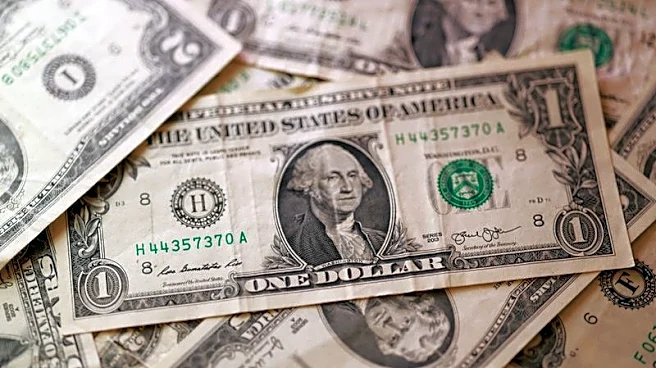
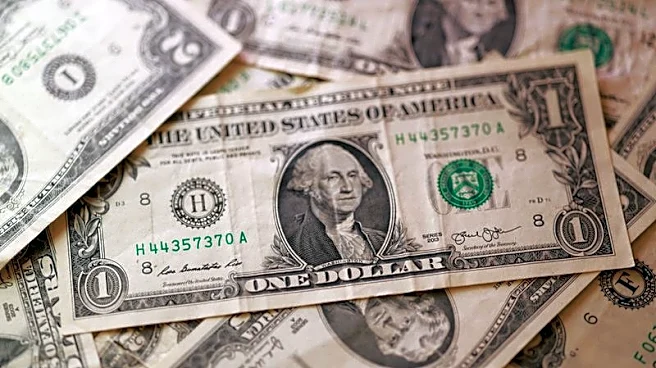
The U.S. dollar reached a new 40-year high against the Japanese yen and gained against the euro on Thursday, driven by rising oil prices and geopolitical tensions in the Middle East. The European Central
Bank (ECB) kept interest rates unchanged, but left the door open for a potential rate hike in September due to inflationary pressures from increased energy prices. The dollar's strength is attributed to the U.S. economy's relative insulation from energy price shocks compared to Europe and Japan. The dollar index, which measures the greenback against a basket of currencies, rose by 0.36%, while the euro fell by 0.33%.
Why It's Important?
The dollar's rise reflects investor demand for safe-haven assets amid geopolitical uncertainties and rising oil prices. The U.S. economy's perceived resilience to energy price shocks supports the dollar's strength, influencing global currency markets and trade dynamics. The ECB's decision to maintain interest rates highlights the challenges central banks face in balancing inflation control with economic growth. The dollar's performance impacts international trade, investment flows, and economic stakeholders, as currency fluctuations affect export competitiveness and import costs.
What's Next?
Market participants will focus on the Federal Reserve's upcoming policy meeting, where interest rate decisions will be closely scrutinized. The ECB's September meeting will also be pivotal, as it may signal a shift in monetary policy if inflationary pressures persist. Geopolitical developments in the Middle East and their impact on oil prices will continue to influence currency markets. Traders will monitor central bank communications for insights into future policy directions, as these will shape market expectations and economic outcomes.