






What's Happening?
The Occupational Safety and Health Administration (OSHA) regulations for personal protective equipment (PPE) are not keeping pace with advancements in safety gear technology, according to industry experts. While OSHA mandates certain safety standards,
the specific references within its regulations often cite outdated versions of national consensus standards, such as those from the American National Standards Institute (ANSI) and the International Safety Equipment Association (ISEA). For instance, OSHA's regulations still reference older versions of the Z89.1 standard for head protection, even though newer versions like ANSI/ISEA Z89.1-2020 exist and offer enhanced protection. This discrepancy means that equipment that is technically OSHA-compliant may not represent the most effective or modern protection available to workers. The International Safety Equipment Association (ISEA) is actively publishing updated standards for various PPE, including head protection, eyewear, gloves, and first aid kits, reflecting improvements in design, testing, and emergency preparedness. This situation creates a gap where employers must decide whether to adhere strictly to minimum OSHA requirements or invest in more advanced, albeit not explicitly mandated, safety equipment to better protect their workforce.
Why It's Important?
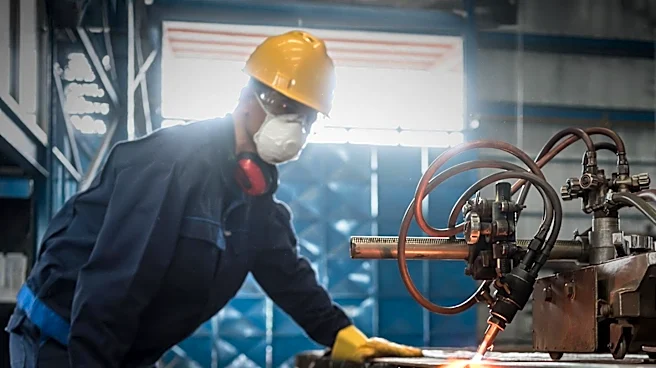
This divergence between OSHA regulations and current safety equipment standards has significant implications for worker safety and employer liability across the U.S. industries. Employers who rely solely on meeting the minimum OSHA requirements might inadvertently expose their workers to greater risks, as newer PPE often provides superior protection against workplace hazards. For example, modern head protection standards include designations like 'Type I+' and 'Type II+' for enhanced retention, which can be crucial in preventing injuries from falls or impacts. The financial impact of workplace injuries, such as hand injuries costing an average of $46,000, underscores the importance of effective PPE. While OSHA's non-prescriptive approach allows for innovation, it also places a greater burden on employers to proactively seek out and implement the best available safety solutions, rather than just the compliant ones. This situation also highlights the role of safety professionals and Qualified Safety Sales Professionals (QSSPs) in guiding businesses to select appropriate gear that goes beyond basic compliance, ultimately affecting worker well-being and company operational costs.
What's Next?
In response to the evolving landscape of safety equipment, industry organizations like ISEA are continuously updating their standards for PPE. Employers are encouraged to view OSHA compliance as a baseline rather than the ultimate goal for worker protection. The ongoing publication of new ANSI/ISEA standards for head protection (Z89.1), eyewear (Z87.1), hand protection (105), and first aid kits (Z308.1) will continue to introduce more effective safety solutions. Businesses will likely need to increasingly consult with safety professionals or QSSPs to conduct job hazard assessments and select PPE that aligns with the latest advancements, even if not yet explicitly referenced in OSHA regulations. There may also be a growing push for OSHA to update its regulations more frequently to incorporate these newer standards, ensuring that minimum compliance levels reflect contemporary safety best practices. Furthermore, the inclusion of optional but recommended items in first aid kits, such as opioid overdose reversal medication and anti-choking devices, suggests a broader trend towards comprehensive workplace emergency preparedness.
Beyond the Headlines
The gap between OSHA regulations and modern safety equipment standards points to a broader challenge in regulatory frameworks keeping pace with technological innovation. This issue extends beyond just PPE, potentially affecting various aspects of workplace safety where new technologies offer improved protections. Ethically, employers face a dilemma: adhere to legally sufficient but potentially outdated standards, or invest in superior, non-mandated equipment to ensure the highest level of worker safety. This situation could lead to legal complexities in the event of workplace accidents, where adherence to minimum OSHA standards might not be sufficient to demonstrate due diligence if more effective equipment was readily available. Culturally, it fosters an environment where safety is not just about compliance but about continuous improvement and proactive risk mitigation. The emphasis on worker comfort and involvement in PPE selection also highlights a shift towards a more human-centered approach to safety, recognizing that effective protection relies on workers actually wearing and utilizing the equipment properly.