



What's Happening?
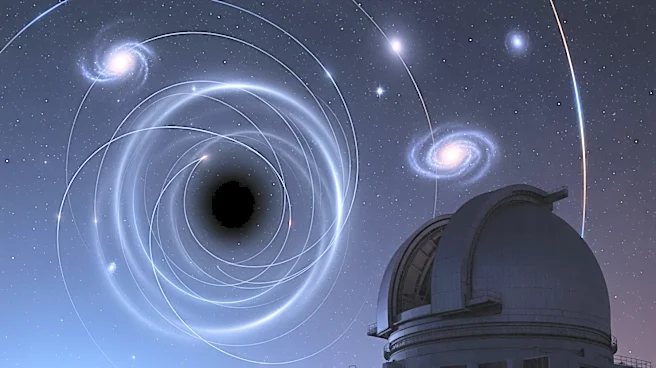
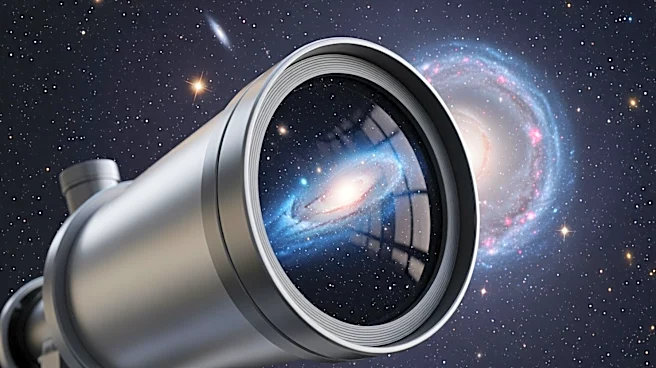
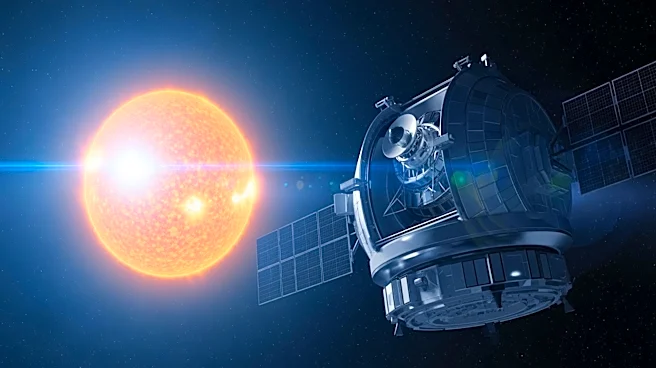
The European Space Agency (ESA) has launched a citizen science project called Space Warps, inviting the public to help identify gravitational lenses in images from the Euclid Space Telescope. Gravitational lenses occur when massive objects like galaxies
warp spacetime, bending light from more distant objects. These lenses can magnify distant galaxies, providing valuable data for studying the universe's structure and dark matter distribution. The project aims to engage volunteers in analyzing images to find these rare cosmic distortions, which are difficult to detect even with advanced machine learning tools. Participants will review images and flag potential lensing features, contributing to a growing database of gravitational lens candidates.
Why It's Important?
This initiative highlights the role of citizen science in advancing astronomical research. By involving the public, ESA can process vast amounts of data more efficiently, potentially identifying over 10,000 new lens candidates. These discoveries could enhance our understanding of the universe's large-scale structure and the distribution of dark matter. The project also demonstrates the increasing reliance on public participation in scientific research, leveraging human pattern recognition skills to complement machine learning algorithms. This approach not only accelerates data analysis but also fosters public engagement and education in science.
What's Next?
As the project progresses, ESA expects to expand its database of gravitational lenses significantly. The findings will be used to refine models of cosmic structure and improve artificial intelligence systems for data processing. The success of this initiative could lead to more citizen science projects in astronomy, encouraging broader public involvement in scientific discovery. Participants will continue to receive training and feedback, enhancing their ability to contribute effectively to the project.