
What's Happening?
The United States and Iran have agreed to a two-week ceasefire, temporarily de-escalating tensions over the Strait of Hormuz. President Trump announced the decision to hold off on military strikes against
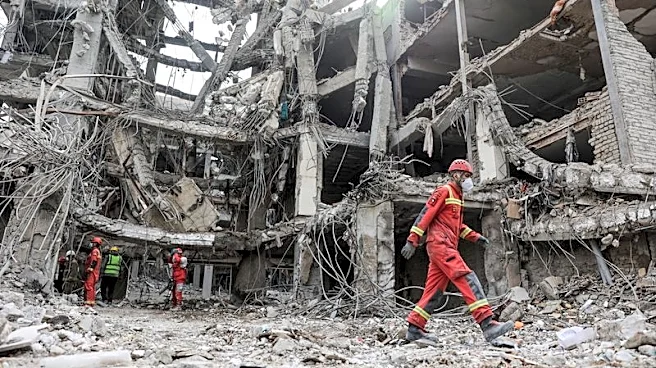
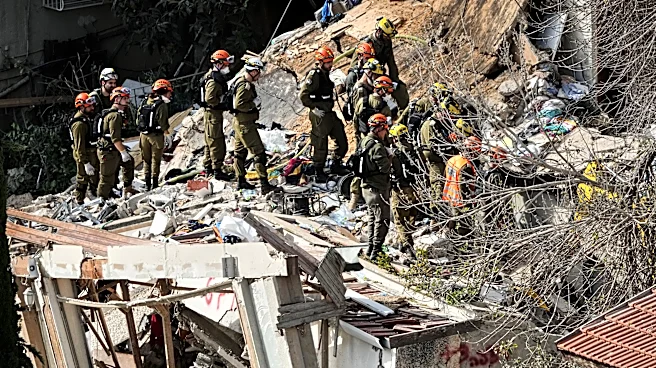
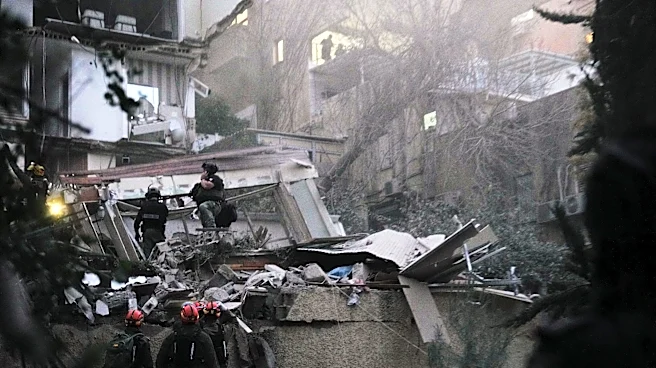
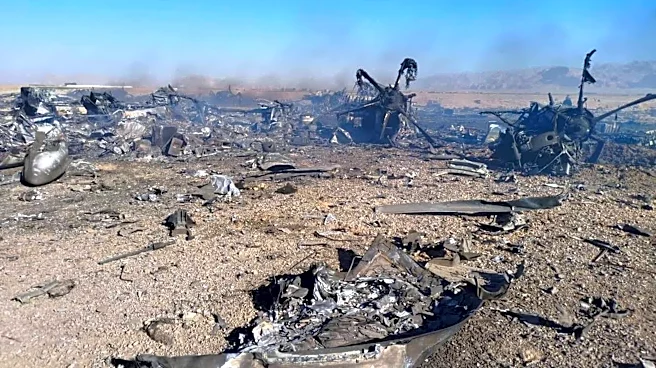
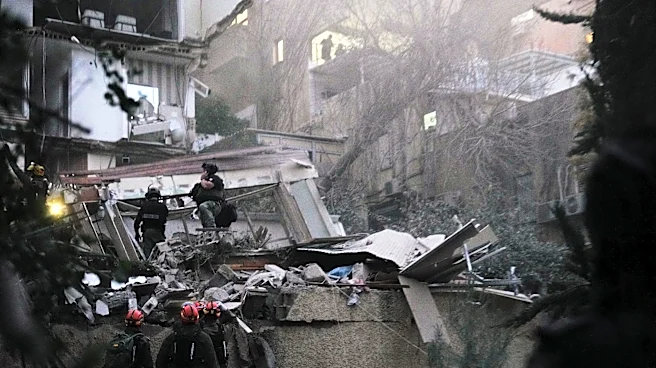
Iran, contingent on Iran's agreement to reopen the strategic waterway. This development follows a period of heightened conflict, with the U.S. and Israel launching attacks on Iranian military targets. Iran has responded with strikes on Israel and Saudi Arabia, leading to regional instability. The ceasefire agreement includes negotiations set to begin in Islamabad, with Iran allowing passage through the Strait under its military management. The situation remains tense, with missile alerts continuing in the UAE and Israel.
Why It's Important?
The Strait of Hormuz is a critical chokepoint for global oil trade, with about 20% of the world's oil passing through it. The closure of the Strait has significant implications for global oil prices and economic stability. The ceasefire offers a temporary reprieve, potentially stabilizing oil markets and reducing the risk of further military escalation. However, the situation remains fragile, with the potential for renewed conflict if negotiations fail. The agreement reflects ongoing diplomatic efforts by countries like Pakistan, Egypt, and Turkey to mediate the crisis. The outcome of these negotiations could have lasting impacts on regional security and international relations.
What's Next?
Negotiations between the U.S. and Iran are set to begin in Islamabad, with the focus on reaching a longer-term resolution. The international community will be closely monitoring these talks, as the outcome could influence future U.S. foreign policy and regional dynamics. There is potential for further diplomatic engagement, but also the risk of renewed hostilities if the ceasefire breaks down. Key stakeholders, including the United Nations and regional powers, may play a role in supporting the negotiation process and ensuring compliance with international law.