





What's Happening?
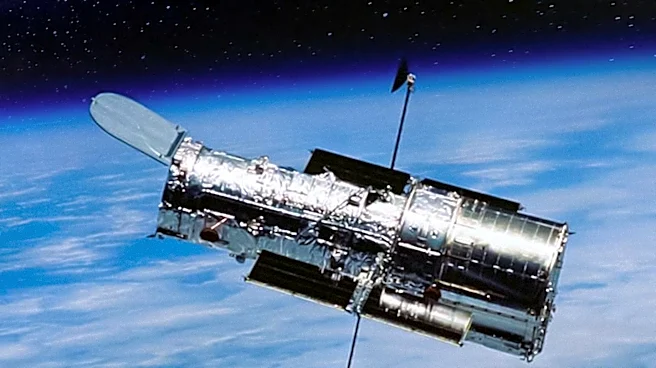
The National Academies of Sciences, Engineering, and Medicine (NAS) has delivered a report to NASA evaluating strategies to prolong the operational capabilities of the Hubble Space Telescope (HST). Launched in 1990, HST has been instrumental in astronomical
research, providing critical data and images of distant galaxies, nebulae, and exoplanets. Despite its continued functionality, the telescope is nearing the end of its operational lifespan, prompting discussions about its future. The report examines the feasibility, benefits, and challenges associated with various approaches, including hardware upgrades, operational adjustments, and potential partnerships with other space missions. The last servicing mission for Hubble was in May 2009, which upgraded instruments and extended its life. The NAS committee emphasizes the importance of closely monitoring HST's health and performance, noting that the risk of system failures, particularly with critical components like gyroscopes and batteries, increases over time. Proactive measures, contingency plans, and remote troubleshooting are suggested to address potential issues.
Why It's Important?
The Hubble Space Telescope represents a significant investment in scientific infrastructure and has profoundly advanced humanity's understanding of the universe. Its unique position above Earth's atmosphere allows for unparalleled clarity in astronomical observations, making it an essential tool for astronomers globally. Extending its operational life would allow for continued groundbreaking research and data collection, complementing newer missions like the James Webb Space Telescope. The report's findings are crucial for NASA's strategic planning, influencing decisions on resource allocation, technological development, and international collaborations in space exploration. The continued operation of Hubble could also inspire future generations in STEM fields and maintain the U.S.'s leadership in space science. Conversely, a premature end to its mission would mean a loss of unique observational capabilities and a gap in long-term astronomical data, impacting ongoing studies and future discoveries.
What's Next?
NASA will review the NAS committee's report to determine the most viable options for the Hubble Space Telescope's future. This will likely involve detailed assessments of the financial implications and technical feasibility of proposed hardware upgrades, such as replacing aging gyroscopes or power systems. Operational adjustments, including modifying observation schedules to reduce wear and tear, will also be considered. Furthermore, NASA will explore potential partnerships with other space missions, like the James Webb Space Telescope, to maximize scientific output and avoid duplicating efforts. Securing funding for any life-extension initiatives will be a significant challenge, given competing priorities within NASA and the broader scientific community. The decisions made will shape the trajectory of U.S. astronomical research for years to come, influencing the types of discoveries possible and the continued legacy of one of the most iconic observatories in history.
Beyond the Headlines
The discussion surrounding the Hubble Space Telescope's longevity highlights broader ethical and strategic considerations in space exploration. The immense cost and effort involved in launching and maintaining such an observatory raise questions about the optimal balance between extending the life of existing assets and investing in new technologies. The report implicitly touches upon the concept of planned obsolescence in complex scientific instruments and the challenges of long-term maintenance in the harsh environment of space. Furthermore, the potential for partnerships with other missions underscores a growing trend towards collaborative international efforts in space science, pooling resources and expertise to achieve more ambitious goals. The legacy of Hubble, as a testament to human ingenuity and the pursuit of knowledge, also serves as a powerful symbol for public engagement with science, making its continued operation a matter of both scientific utility and public inspiration.