





What's Happening?
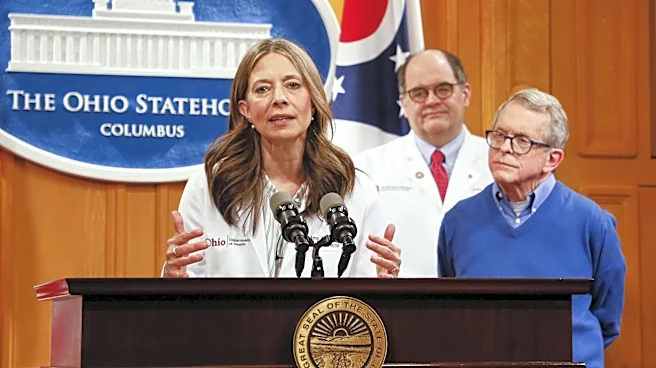
Dr. Anne Zink, Alaska’s chief medical officer during the COVID-19 pandemic, recently reflected on the challenging period, highlighting the emotional and social tolls experienced by individuals and the state. She described the frustration of witnessing
patients struggle with COVID-19, feeling that protective tools were not utilized, and the difficulty of alleviating suffering. Dr. Zink also expressed her disappointment regarding the inability to prioritize children's in-person schooling, noting that most schools in Alaska, including Anchorage, switched to online learning. She emphasized the ongoing societal grief, anger, and healing stemming from the pandemic's impact. Dr. Zink advocated for greater compassion and understanding among people, suggesting that differing decisions, such as those regarding vaccination, often stem from different information sets, and that assuming good intent is crucial for fostering deeper understanding rather than division.
Why It's Important?
The reflections from a key public health official like Dr. Zink underscore the profound and lasting impact of the COVID-19 pandemic on American society, particularly in states like Alaska. Her insights reveal the immense pressure faced by healthcare professionals and the ethical dilemmas encountered when public health recommendations clashed with individual choices. The frustration over school closures and the shift to online learning highlights a significant societal debate during the pandemic, with long-term implications for education and child development. Furthermore, Dr. Zink's call for compassion and understanding addresses the deep divisions and diminished trust in government health organizations that emerged during the crisis. This perspective is crucial for understanding the ongoing psychological and social recovery of communities and for informing future public health communication strategies to rebuild trust and foster unity.
What's Next?
Moving forward, Dr. Zink's emphasis on compassion and understanding suggests a continued need for dialogue and empathy in addressing the lingering effects of the pandemic. Public health officials and community leaders may focus on initiatives that promote healing and reconciliation within communities still grappling with the emotional and social aftermath. There could be a renewed effort to evaluate and improve educational contingency plans to ensure that children's schooling remains a priority during future crises. Additionally, her reflections might prompt a re-evaluation of public health communication strategies to better address misinformation and foster trust, particularly concerning vaccination and other health interventions. The ongoing process of grieving and healing from the pandemic's emotional toll will likely continue to shape individual and collective responses to health challenges.
Beyond the Headlines
Dr. Zink's candid reflections delve into the less obvious, yet deeply significant, ethical and cultural dimensions of the pandemic. Her struggle with patient suffering and the perceived underutilization of protective measures touches upon the moral injury experienced by many healthcare workers. The societal debate over school closures and online learning also highlights a fundamental tension between public health mandates and individual freedoms, as well as the varying cultural values placed on education and community interaction. Her call for understanding different perspectives on vaccination, even when they diverge from public health recommendations, points to a broader challenge in a diverse society: how to navigate scientific consensus amidst deeply held personal beliefs and varying information sources. This ongoing societal introspection will be critical in shaping future responses to crises, emphasizing the need for a more nuanced approach that considers not only scientific facts but also the complex human and cultural factors at play.