






What's Happening?
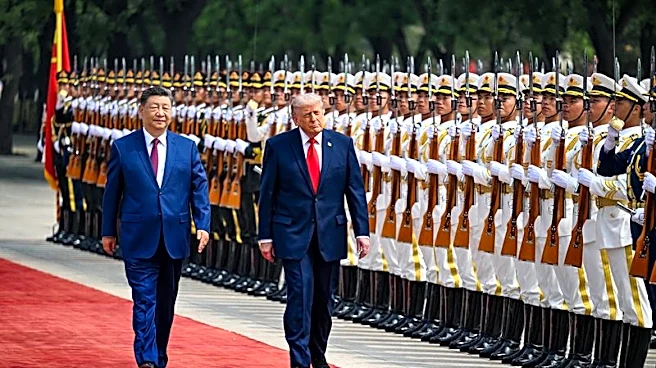
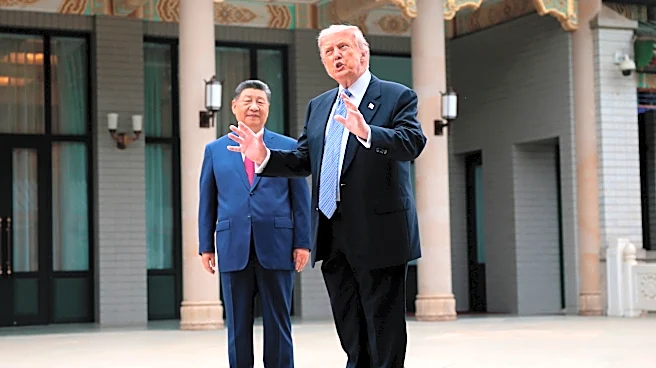
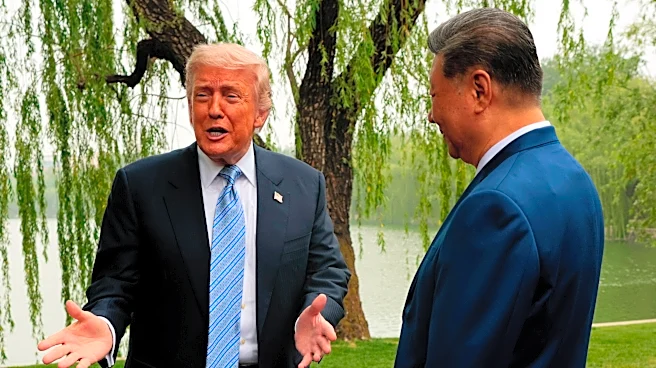
President Trump recently concluded a high-stakes visit to China, where he met with Chinese President Xi Jinping. The visit focused on trade discussions, with President Trump announcing potential deals, including China's agreement to purchase 200 Boeing
airplanes and significant quantities of soybeans from American farmers. However, specifics of these deals remain unconfirmed by the Chinese side. The meetings emphasized stability, a crucial aspect for China amid challenges such as the U.S. trade war and the war in Iran affecting its crude oil supply. The visit did not yield major breakthroughs, particularly on sensitive issues like Taiwan, though President Trump hinted at using potential U.S. arms sales to Taiwan as a negotiating tool.
Why It's Important?
The visit underscores the complex and often tense relationship between the U.S. and China, the world's two largest economies. While the announcement of trade deals could benefit American industries, the lack of concrete agreements highlights ongoing uncertainties in U.S.-China relations. Stability is a key concern for China, which has been impacted by global economic and geopolitical tensions. The visit's focus on stability suggests a mutual interest in avoiding further escalation of trade conflicts, which could have significant implications for global markets and economic policies.
What's Next?
Future meetings between President Trump and President Xi Jinping are expected, with both sides likely to continue negotiations on trade and other bilateral issues. The emphasis on stability may lead to efforts to de-escalate trade tensions and foster a more predictable economic environment. Observers will watch for any shifts in U.S. policy towards China, particularly regarding trade and Taiwan, as these could influence broader geopolitical dynamics. The outcomes of these discussions will be critical in shaping the future of U.S.-China relations.