




What's Happening?
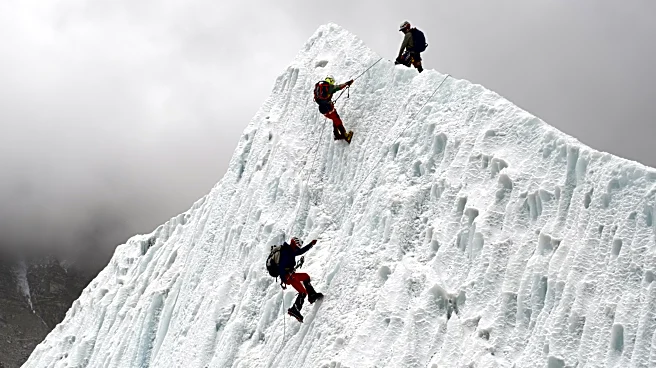
Two Indian climbers have died on Mount Everest during a record-breaking period of ascents via Nepal's southern route. The climbers, Sandeep Are and Arun Kumar Tiwari, fell ill while descending from the peak. Their deaths are part of a broader concern
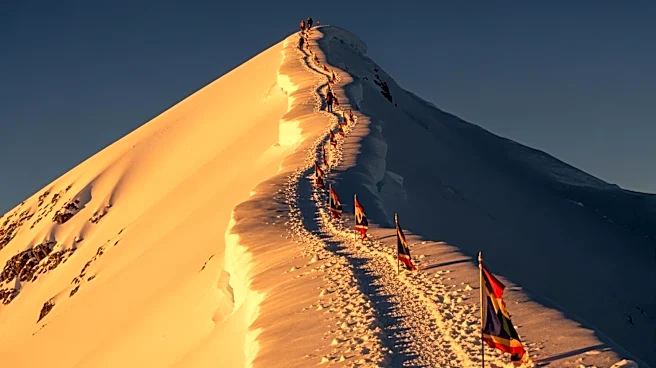
about overcrowding on Everest, as a record number of climbers reached the summit recently. Nepali climber Kami Rita Sherpa, who scaled Everest for the 32nd time, expressed concerns about the experience level of some climbers and the need for authorities to control the number of climbers. The overcrowding issue is exacerbated by the closure of the northern route in Tibet by Chinese authorities, leading to increased traffic on the Nepali side.
Why It's Important?
The deaths of climbers on Everest highlight the risks associated with overcrowding on the world's highest peak. The increased number of climbers can lead to dangerous congestion, particularly in high-altitude zones with low oxygen levels. This situation raises safety concerns and calls for stricter regulations and limits on the number of climbers allowed. The issue also impacts the reputation of Nepal's mountaineering industry, which is a significant source of revenue. Addressing overcrowding is crucial to ensuring the safety of climbers and maintaining sustainable tourism practices on Everest.
What's Next?
Nepalese authorities may consider implementing stricter controls and higher fees to manage the number of climbers on Everest. The mountaineering community is likely to engage in discussions about improving safety measures and ensuring climbers have adequate experience and preparation. The ongoing season will continue to be monitored for further incidents, and adjustments to climbing regulations may be proposed to prevent future overcrowding and associated risks.