

What's Happening?
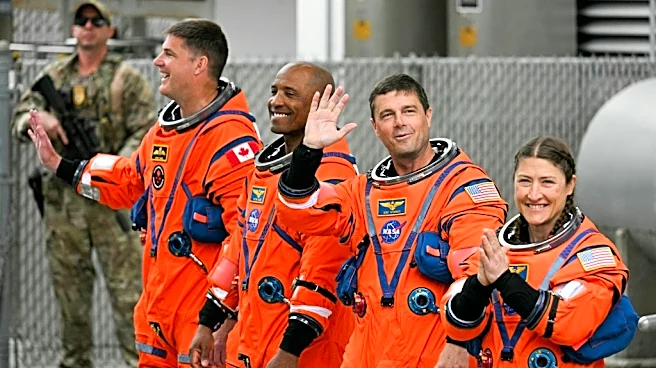
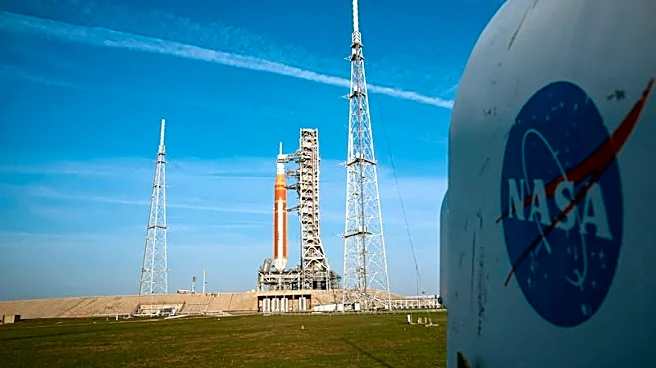
NASA, in collaboration with the European Space Agency (ESA), is preparing for the launch of Artemis II, marking the first crewed mission to the Moon in over 50 years. The mission will involve four astronauts—three Americans and one Canadian—aboard the Orion
spacecraft, which will be launched by NASA's Space Launch System (SLS) rocket. The mission is set to last 10 days, during which the spacecraft will travel within 4,600 miles of the Moon. The crew includes Commander Reid Wiseman, Pilot Victor Glover, mission specialist Christina Koch, and Canadian mission specialist Jeremy Hansen. This mission aims to test critical systems for future lunar landings and is a significant step towards establishing a sustained human presence on the Moon.
Why It's Important?
The Artemis II mission is crucial for maintaining U.S. leadership in space exploration, especially amid growing competition from countries like China. By testing critical systems and demonstrating international collaboration, the mission sets the stage for future lunar landings and potential missions to Mars. The inclusion of a diverse crew, featuring a woman and a non-American astronaut, reflects a broader commitment to diversity in space exploration. This mission not only advances technological capabilities but also strengthens international partnerships, which are essential for the future of space exploration.
What's Next?
Following the Artemis II mission, NASA plans to continue its Artemis program with subsequent missions aimed at landing humans on the lunar surface. The success of Artemis II will inform the development of technologies and strategies for these future missions. Additionally, the mission's outcomes will likely influence international collaborations and funding for space exploration initiatives. The next launch window for Artemis II extends through the first six days of April, with another opportunity later in the month if needed.