
What's Happening?
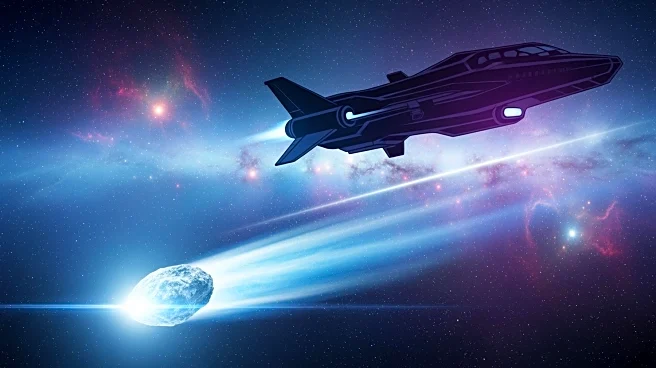
On March 2, 2004, the Rosetta-Philae spacecraft was launched by the European Space Agency from French Guiana. The mission aimed to rendezvous with Comet 67P/Churyumov-Gerasimenko to gather data about the early solar system. After a decade-long journey
involving multiple gravity assists, Rosetta successfully entered orbit around the comet in August 2014 and deployed the Philae lander. The mission concluded on September 30, 2016, with the orbiter's controlled impact on the comet.
Why It's Important?
The Rosetta mission provided unprecedented insights into cometary composition and behavior, contributing significantly to our understanding of the solar system's formation. The data collected has been crucial for scientists studying the origins of water and organic molecules on Earth, potentially offering clues about the conditions necessary for life. The mission's success also demonstrated the capabilities of international collaboration in space exploration.