







What's Happening?
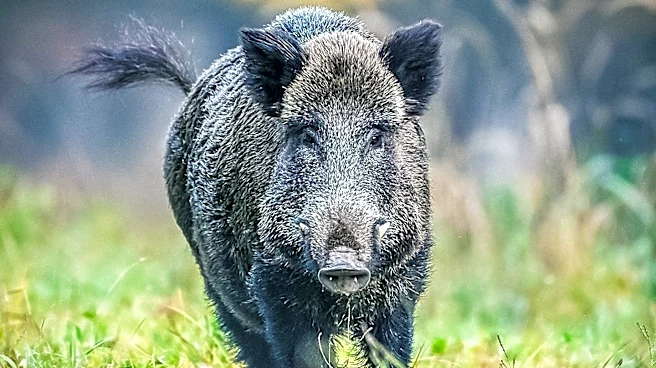
The U.S. Department of Agriculture (USDA) is investing $35 million to combat the destructive impacts of feral swine across 14 states, including Texas. This funding is part of a broader $105 million investment under the Feral Swine Eradication and Control
Pilot Program, supported by the Working Families Tax Cuts Act. Feral swine cause significant damage to agriculture, landscapes, and human and livestock health, with estimated annual losses of $3.4 billion nationwide. The program aims to support coordinated removal efforts, land restoration, and producer assistance, involving state governments, local governments, tribal organizations, and nonprofits.
Why It's Important?
Feral swine pose a major threat to agriculture and natural resources, causing billions in damages annually. This funding will help mitigate these impacts by supporting coordinated control efforts. By involving multiple stakeholders, the program aims to enhance the effectiveness of eradication strategies and protect agricultural lands. The initiative also highlights the importance of federal support in addressing invasive species, which can have widespread economic and environmental consequences.
What's Next?
Eligible applicants for the funding must submit proposals by September 21. The USDA will collaborate with selected partners to implement eradication and control projects. These efforts will include landowner assistance, on-farm trapping, and training services. The success of this program could lead to further investments and expanded efforts to manage feral swine populations, ultimately reducing their impact on agriculture and ecosystems.